
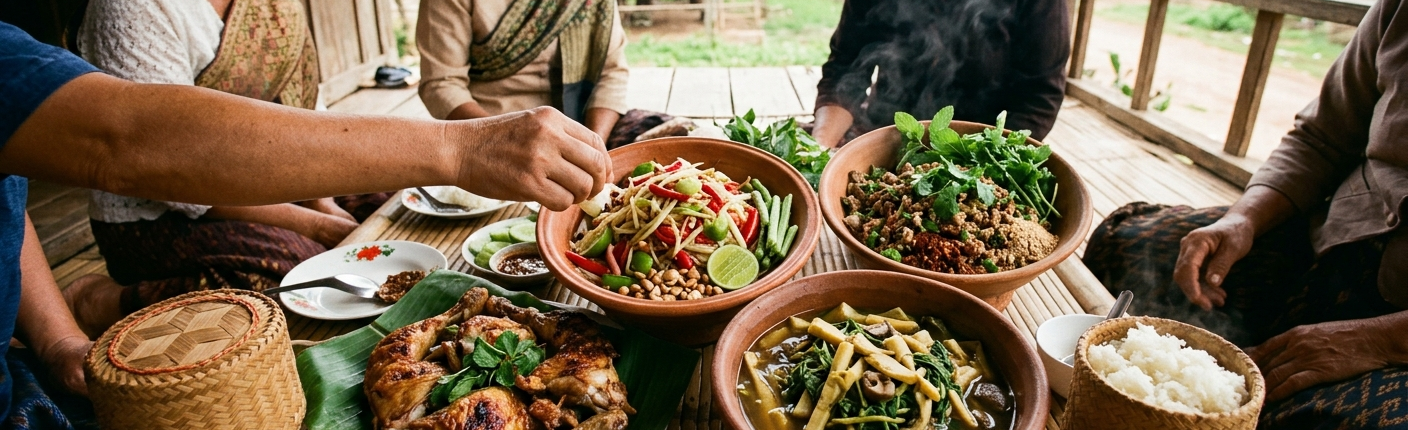
Lao cuisine reflects the ethnic diversity of the country and its surrounding neighbors. Laos has strong regional variations even among common dishes, with sticky rice being the staple of most meals.
A common Lao meal would consist of a richly spiced minced fish or chicken salad or larb, served with sticky rice; a jaew or paste made of chili peppers for dipping; tam mak hung – a fiery and sour fresh green papaya salad, a broth based soup like kaeng no mai (bamboo soup); fresh herbs and vegetables served raw; tropical fruit as a dessert; and is served with the local beer or lao-lao rice liquor.
Lao cuisine is similar to Thai, but more bitter, sour and spicy. Wild game and insects known commonly as “jungle food” are also enjoyed.
Vietnamese dishes like pho and spring rolls are extremely popular throughout the country. Ethnic Yunnanese Chinese food is common in Vientiane, and is reflected in the fried dough dishes which are commonly sold as street snacks.
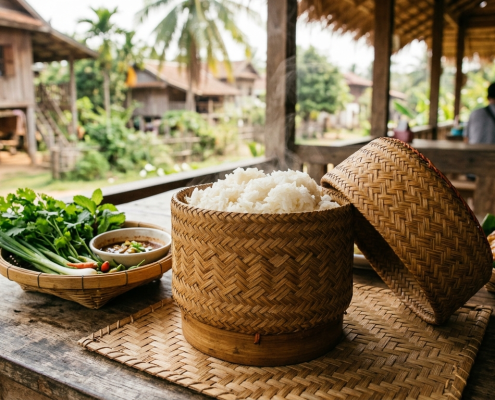
STICKY RICE
Sticky rice is not only a staple food that has sustained the lives of Lao people for a long time, but it is also a symbol and representative of the culture, lifestyle, and strong bonds of the people of the nation.
Lao Sticky Rice Recipe (Khao Niew) & Preparation
“Khao Niew” (Sticky Rice) is the absolute heart and soul of Lao cuisine, eaten as the primary staple with virtually every meal. Steaming it to be perfectly soft, fluffy, and long-lasting requires a specific traditional technique and equipment.
1. Ingredients & Equipment
- Glutinous Rice (Sticky Rice): Desired amount (freshly harvested rice is highly recommended as it yields a more fragrant and softer texture than older rice).
- Clean Water: For soaking and steaming.
- Huad (Bamboo Steaming Basket): A cone-shaped woven bamboo basket, crucial for infusing the rice with a subtle woody aroma.
- Steaming Pot (Mor Khang): A specific tall aluminum pot designed to hold water and support the bamboo huad on top.
- Katip Khao (Rice Basket): A woven bamboo or rattan container with a lid used to keep the steamed sticky rice warm and soft throughout the day.
2. Step-by-Step Instructions
- Wash the rice (Marn Khao): Rinse the raw glutinous rice in clean water 2 to 3 times to remove excess starch and dust. (The leftover cloudy rice water, known as Nam Mouak, is traditionally saved for other uses like fermenting vegetables or washing hair).
- Soak the rice:
- New crop rice: Soak in room temperature water for about 2–4 hours
- Old crop rice: Soak for about 6–8 hours (or overnight).
- Steam the rice: Fill the steaming pot about 1/3 full with clean water and bring it to a boil over medium-high heat. Drain the soaked rice and transfer it into the bamboo huad. Shake it gently to let any excess water drip out, then place the basket securely on top of the boiling pot. Cover the basket with a lid.
- Flip the rice (Sai Khao): Steam for about 15–20 minutes until the steam rises evenly through the top. Lift the bamboo basket and carefully toss or flip the block of rice upside down (sending the top layer to the bottom and vice versa) to ensure even cooking. Steam for another 5–10 minutes.
- Air out the rice (Phueng Khao): Once the rice is fully cooked and translucent, empty it onto a large wooden tray (Bong Sai Khao) or a clean woven mat. Use a wooden paddle to spread and toss the rice gently, letting the hot surface steam evaporate. (This step is crucial; if you don’t air out the steam, the rice will become soggy and wet).
- Store and Serve: While the rice is still warm, immediately pack it into the Katip Khao (sticky rice basket) and close the lid. This traps the perfect amount of moisture to keep it soft and pliable, ready to be enjoyed alongside your favorite Lao dishes!
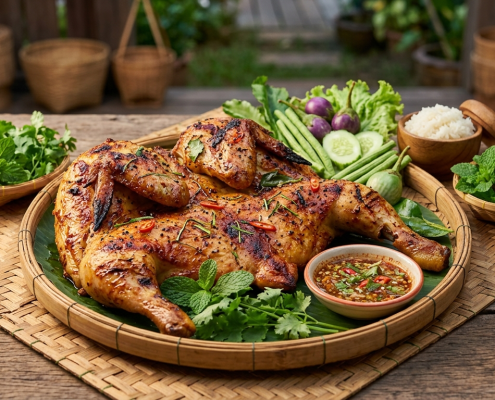
GRILL CHICKEN
Grilled Lao Chicken is not just a traditional Lao food menu, but it is an art of combining local spices that reflects the meticulousness and simple yet charming way of eating of the Lao people.
Lao Herb-Marinated Grilled Chicken Recipe (Ping Kai) & Ingredients
“Ping Kai” (especially the famous styles like Ping Kai Seno or local free-range chicken) is a beloved, timeless Lao staple. Its signature appeal lies in the deeply aromatic herbs, succulent and tender meat, and a beautifully golden, slightly crisp skin.
1. Main Ingredients
- Whole Chicken: 1 whole chicken (around 1.2 kg; free-range or standard chicken. Split down the breastbone and flattened/spatchcocked).
- Bamboo Grilling Skewers & Wire/String: (Traditional bamboo clamps used to hold the chicken flat. If unavailable, a standard wire grilling basket works perfectly).
2. Herbs for the Marinade Paste (The Heart of the Aroma)
- Lemongrass (Tang Khai): 2-3 stalks (thinly sliced)
- Garlic: 1 large head
- Coriander Roots (Cilantro Roots): 3-4 roots
- Young Galangal: 1 small slice (chopped)
- Whole Black Peppercorns: 1 teaspoon
3. Seasonings
- Fermented Fish Sauce (Padaek): 1-2 tablespoons (boiled/cooked; adds a distinct Lao umami depth)
- Oyster Sauce: 2 tablespoons
- Light Soy Sauce: 1 tablespoon
- Fish Sauce: 1 tablespoon
- Palm Sugar (or Granulated Sugar): 1 tablespoon (helps caramelize the skin and balance the savory notes)
- MSG: 1/2 teaspoon
- Vegetable Oil: 1 tablespoon (keeps the chicken moist and prevents it from drying out over the coals)
- Turmeric Powder (or yellow food coloring): 1/2 teaspoon (gives the grilled chicken its iconic, appetizing golden-yellow hue)
4. Step-by-Step Instructions
- Prep the chicken: Wash and clean the chicken thoroughly. Spatchcock the chicken by cutting along the breastbone and pressing it flat (or chop into large pieces if preferred). Use a fork or the tip of a sharp knife to prick the chicken all over so the marinade can penetrate deeply.
- Pound the marinade paste: In a mortar and pestle, combine the sliced lemongrass, garlic, coriander roots, young galangal, and black peppercorns. Pound until it forms a fine, fragrant paste.
- Marinate the chicken: Transfer the herb paste into a large mixing bowl. Add all the seasonings: padaek, oyster sauce, light soy sauce, fish sauce, palm sugar, MSG, turmeric powder, and vegetable oil. Mix well. Add the chicken to the bowl and thoroughly massage the marinade over every part of the meat and skin. Marinate for at least 1-2 hours (leaving it covered in the fridge overnight yields the best flavor).
- Clamp the chicken: Secure the marinated chicken tightly between the traditional bamboo skewers and tie the ends securely (or place it firmly inside your grilling basket).
- Grill over charcoal: Prepare your charcoal grill using low-to-medium heat (avoid high heat, as the skin will burn before the interior cooks through). Place the chicken on the grill and flip it regularly. While grilling, periodically brush the leftover marinade onto the chicken to lock in the flavor and moisture. Grill until both sides are deeply golden, fragrant, and fully cooked through (about 35-45 minutes, depending on the size of the chicken).
- Serve: Remove from the grill and chop into bite-sized pieces. Arrange on a platter and serve hot with a basket of fresh sticky rice, papaya salad (Tam Mak Hoong), and a side of spicy dipping sauce (Jeaw Som) or a bitter dipping sauce (Jeaw Khome) to your liking!
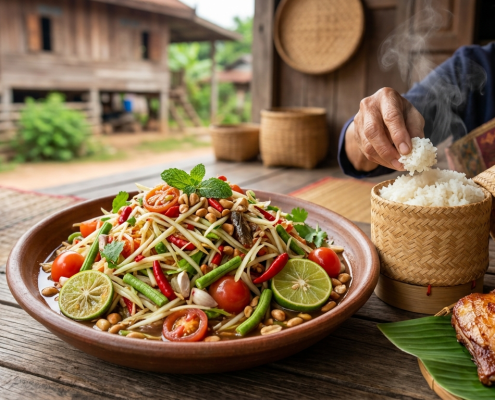
PAPAYA SALAD
Papaya Salad (Tam Mak Houng): A delicious menu with sour, spicy, and nutty flavors that are hearty and delicious. It goes well with hot steamed rice.
Lao Papaya Salad Recipe (Tam Mak Hoong) & Ingredients
Lao-style papaya salad focuses on a savory, robust flavor from fermented fish sauce (Padaek), combined with a fiery chill, sourness, and a touch of sweetness to balance it out.
1. Main Ingredients
- Green Papaya: 1 piece (shredded or chopped into long strips; recommended to soak in ice water for crispness)
- Cherry Tomatoes (Lao Tomatoes): 3-4 pieces (halved)
- Lime: 1-2 tablespoons (to taste)
- Yardlong Beans: 1-2 stalks (snapped into bite-sized pieces)
- Fresh or Dried Chilies: 5-10 peppers (adjust to your spice preference)
- Garlic: 2-3 cloves
2. Seasonings
- Fermented Fish Sauce (Padaek): 2-3 tablespoons (boiled/cooked; the heart of the savory umami flavor)
- MSG: 1/2 teaspoon
- Sugar (Palm Sugar or Granulated Sugar): 1/2 teaspoon (just to cut the sharpness, not to make it overly sweet)
- Fish Sauce: 1 teaspoon (for added aroma)
3. Step-by-Step Instructions
- Pound the aromatics: Add garlic and chilies into the mortar. Pound until roughly crushed (crush more thoroughly if you prefer it extra spicy).
- Add the vegetables: Add the yardlong beans and bruise them lightly with the pestle, followed by the tomatoes.
- Season: Add MSG, sugar, squeeze in the lime juice, and pour in the padaek. Use the pestle to gently mix and press the ingredients until the sugar dissolves.
- Mix in the papaya: Add the shredded green papaya. Gently pound while using a spoon to toss and turn the salad simultaneously so the dressing thoroughly coats the papaya strips (avoid pounding too hard, or the papaya will lose its crunch and become bruised).
- Taste test: Taste and adjust as preferred (it should be sour, spicy, and deeply savory from the padaek).
- Serve: Transfer to a plate. Serve alongside warm sticky rice, grilled chicken, and fresh vegetables like cabbage, water spinach, or lettuce.
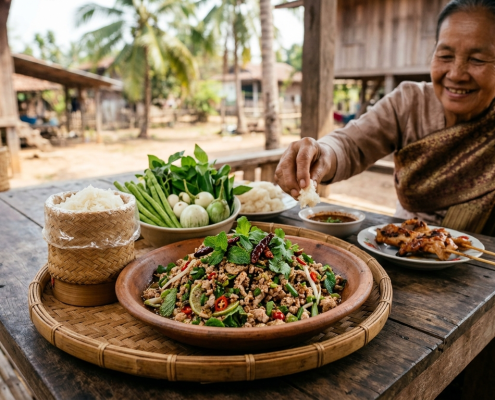
LARB
Whether it’s pork, beef, or fish stew, it’s seasoned with spices and fragrant rice, which is considered auspicious food in Laos..
Lao Pork Larb Recipe (Larb Moo) & Ingredients
“Larb” is considered a lucky dish and a hallmark of Lao cuisine, traditionally prepared for festivals, weddings, or special gatherings. Authentic Lao larb highlights the aroma of fresh herbs and toasted rice powder with a deeply savory profile.
1. Main Ingredients
- Minced Pork: 300g (choose a cut with a little fat so the meat stays moist)
- Pork Offal: 150g (liver, small intestines, stomach – boiled and sliced into bite-sized pieces)
- Boiled Pork Skin: 50g (thinly sliced – optional)
2. Herbs (Finely Sliced/Prepped)
- Shallots: 3-4 heads (thinly sliced)
- Culantro (Sawtooth Coriander): 2-3 stalks (chopped)
- Mint Leaves: 1 handful (plucked)
- Green Onions (Scallions): 2-3 stalks (chopped)
- Young Galangal: 1 teaspoon (finely minced or pounded – helps eliminate gaminess and adds aroma)
3. Seasonings
- Toasted Rice Powder (Khao Khoua): 2 tablespoons (the key element; should be freshly toasted for maximum aroma)
- Chili Flakes: 1-2 tablespoons (adjust to preference)
- Fermented Fish Sauce (Padaek): 1 tablespoon (boiled/cooked)
- Fish Sauce: 1-2 tablespoons
- Lime Juice: 2-3 tablespoons (adjust for desired sourness)
- MSG: 1/2 teaspoon
4. Step-by-Step Instructions
- Cook the meat (Luan): Set a pot over medium heat with a tiny splash of water or broth (about 3-4 tablespoons) and add the minced galangal. Add the minced pork and stir-fry until completely cooked through. Once cooked, turn off the heat and let it cool slightly (do not season while boiling hot, or it will wilt the herbs and turn the lime juice bitter).
- Add offal and skin: Mix the cooked pork offal and sliced pork skin into the minced pork.
- Season: Add the MSG, padaek, fish sauce, chili flakes, and toasted rice powder. Stir well, then squeeze in the lime juice and toss again.
- Taste test: Adjust the flavors to your liking. Lao larb should taste savory, spicy, balanced with sourness, and distinctly fragrant from the toasted rice.
- Toss in the herbs: Once you are happy with the taste, add the sliced shallots, green onions, culantro, and mint leaves. Gently toss everything together.
- Serve: Transfer to a plate, garnish with a few extra mint leaves and fresh whole chilies (chili bombs). Serve alongside warm sticky rice and a platter of fresh vegetables such as yardlong beans, raw eggplants, white cabbage, or lettuce.
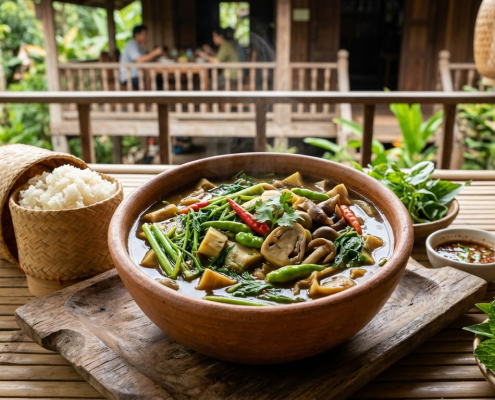
BAMBOO SHOOT SOUP
Bamboo shoot soup with concentrated yam sauce, with vegetables such as bok choy, spinach, and mushrooms for a natural, balanced flavor.
Lao Bamboo Shoot Soup Recipe (Gaeng Nor Mai) & Ingredients
“Gaeng Nor Mai” is a quintessential traditional Lao dish. It features a unique, deeply savory flavor derived from a rich broth of yanang leaf extract and fermented fish sauce (padaek), balanced beautifully with the natural sweetness of assorted vegetables and aromatic herbs.
1. Main Ingredients
- Fresh Bamboo Shoots: 500g (peeled, thinly sliced or lightly bruised, and boiled until the bitterness is gone)
- Yanang Leaf Juice: 3-4 cups (fresh yanang leaves pounded and squeezed to extract a rich, green juice)
- Assorted Mushrooms: 1-2 cups (such as straw mushrooms, oyster mushrooms, wood ear, or puffball mushrooms)
- Luffa (Bwab) or Ivy Gourd Leaves: 1 cup (sliced; added for natural sweetness)
- Meat/Proteins (Optional): Pork belly, pork ribs, beef, or chunks of catfish
2. Aromatic Herbs
- Climbing Wattle (Phak Kha / Cha-om): 1 handful (tender shoots only)
- Lao Lemon Basil (Phak Ee-tou) or Phak Sa-ngae: 1 handful (leaves plucked)
- Shallots: 3-4 heads (lightly bruised)
- Lemongrass (Tang Khai): 1-2 stalks (bruised and cut into sections)
3. Seasonings
- Khao Beua: 2 tablespoons (sticky rice soaked in water and pounded into a smooth paste; used to thicken the soup)
- Fresh Bird’s Eye Chilies: 5-10 peppers (lightly crushed)
- Fermented Fish Sauce (Padaek): 3-4 tablespoons (boiled/cooked; adjust to taste)
- Fish Sauce: 1 tablespoon
- MSG: 1/2 teaspoon
4. Step-by-Step Instructions
- Prepare the broth base: Pour the extracted yanang leaf juice into a pot. Add the pounded khao beua paste and stir thoroughly until completely dissolved to prevent clumping.
- Simmer the aromatics and bamboo: Place the pot over medium heat. Add the lemongrass, shallots, crushed chilies, and the pre-boiled bamboo shoots. (If you are including meat, add it during this step to simmer and tenderize).
- Add mushrooms and vegetables: Once the broth comes to a boil and the khao beua begins to slightly thicken the soup, toss in the mushrooms and luffa (or ivy gourd leaves). Continue simmering until the vegetables and mushrooms are thoroughly cooked.
- Season the soup: Pour in the padaek, fish sauce, and MSG. Stir well, then taste. The soup should have a rich, savory umami depth from the padaek combined with the earthy, natural sweetness of the yanang broth.
- Infuse the herbs: Once you achieve the desired flavor, add the climbing wattle (phak kha) and lemon basil (phak ee-tou). Press the herbs down into the boiling broth. As soon as they release their intense aroma, turn off the heat immediately.
- Serve: Ladle into a large serving bowl. Enjoy hot alongside a basket of fresh sticky rice—it’s the ultimate comfort food combination!
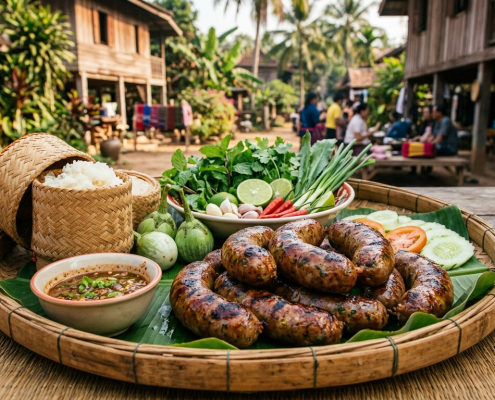
LAO SAUSAGE
Lao sausage (or pork sausage) is one of the traditional dishes that best reflects the uniqueness and richness of Lao cuisine. It is not just a simple sausage stuffed with meat, but a blend of Lao flavors and aromas in every bite.
Lao Sausage Recipe (Sai Gok Lao) & Ingredients
“Sai Gok Lao” (also known simply as Lao pork sausage) is a legendary traditional dish renowned for its heavy, unapologetic infusion of local fresh herbs and aromatics. It can be made as a fresh sausage (savory and deeply herbal) or a sour sausage (fermented to yield a tangy profile).
1. Main Ingredients
- Minced/Ground Pork: 1 kg (choose pork shoulder or butt with roughly 20-30% fat content so the sausage stays incredibly juicy)
- Pork Casings: For stuffing (use fresh small intestines or salt-cured casings, washed thoroughly inside and out with salt and lime juice or vinegar to eliminate any gamey odor)
2. Herb Paste Aromatic Base
- Lemongrass (Tang Khai): 4-5 stalks (finely sliced before pounding)
- Galangal: 1 tablespoon (finely minced)
- Kaffir Lime Leaves: 7-10 leaves (finely julienned)
- Garlic: 1-2 large heads (peeled)
- Shallots: 4-5 heads
- Coriander (Cilantro) & Roots: 2-3 sprigs (finely chopped)
- Fresh or Dried Chilies: 5-10 peppers (adjust to your spice tolerance; adds heat and beautiful color specs)
3. Seasonings
- Fish Sauce: 2 tablespoons
- Salt: 1-2 teaspoons
- Light Soy Sauce: 1 tablespoon
- MSG: 1 teaspoon
- (Optional for Sour Sausage) Cooked Sticky or Jasmine Rice: 1/2 cup (rinsed with water and drained; the carbohydrates trigger the natural fermentation process that makes the sausage pleasantly sour)
4. Step-by-Step Instructions
- Pound the aromatics: In a mortar and pestle, combine the lemongrass, galangal, garlic, shallots, coriander roots, and chilies. Pound into a coarse paste (it shouldn’t be completely smooth; keeping small bits provides a beautiful rustic texture).
- Mix the filling: Place the minced pork in a large mixing bowl. Add the pounded herb paste, julienned kaffir lime leaves, and chopped coriander leaves. Follow with the seasonings: fish sauce, salt, light soy sauce, and MSG. (If you are making the sour variation, mix in the cooked rice during this step).
- Knead the meat: Thoroughly knead the mixture with your hands for at least 10–15 minutes until the pork becomes sticky and binds together. This helps the proteins emulsify and locks in the flavors.
- Stuff the casings: Fit the casing over a funnel or a sausage stuffer. Gently feed the pork mixture into the casing. Do not overstuff or pack it too tightly, otherwise, the casing will burst when cooked.
- Tie into links: Once stuffed, use kitchen twine to tie the sausage into links of your desired length (usually around 10–15 cm). Use a sterilized needle or toothpick to prick any visible air pockets across the links to prevent cracking.
- Air-dry or Ferment: Hang the sausages in a well-ventilated area or under the sun for 3–4 hours until the skins feel dry to the touch. (For the sour sausage variation, leave them to hang at room temperature for 1–2 days to ferment until they achieve that signature tangy taste).
- Cook and Serve: Grill the sausages over low-to-medium charcoal heat, or pan-fry/bake until they are beautifully golden brown and intensely aromatic. Slice into bite-sized discs and serve hot alongside a basket of sticky rice, fresh ginger slices, bird’s eye chilies, cabbage, and raw peanuts!


