
Xayabouly to Host Annual Elephant Festival Amid Ongoing Animal Welfare Debate
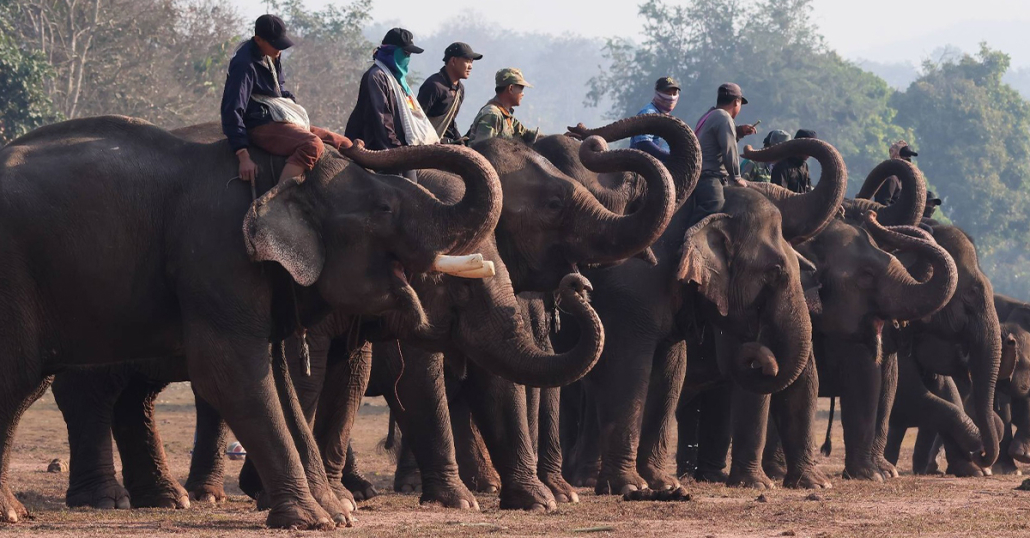
The Elephant Festival (Boun Xang) 2026 will take place in Xayabouly district, the provincial capital, featuring 50 elephants in honor of the 50th anniversary of the Lao People’s Democratic Republic.
Boun Xang will begin on 9 February with a traditional ritual to notify spirits, elephant rides, and an evening cultural performance.
On the following day, a 10-kilometer mini-marathon will take place, adding a sporting dimension to the celebrations.
Throughout the week, visitors can enjoy rehearsals of the grand elephant parades, cultural showcases by ethnic groups, a market offering local and international goods, and traditional alms-giving ceremonies for the elephants.
The official opening ceremony on 14 February will feature cultural performances by over 1,000 local students, unique presentations from all 11 districts across the province, and special elephant demonstrations including dancing to traditional Lao instruments, basketball playing, and painting.
Other key attractions include the Miss Elephant Festival Contest, a merit-making ceremony for the elephants, and an array of cultural performances and concerts.
Visitors can also experience elephant rides through Xayabouly district and participate in various other festival activities.
The festival will close on 16 February with a ceremony honoring elephants and awarding prizes for each district’s parade.
Cultural Significance
The elephant holds deep significance as Laos’ national animal, connecting to the country’s historical identity as Lane Xang Kingdom, or “Land of a Million Elephants,” which flourished from the 14th to 18th centuries.
Xayabouly Province is one of the few remaining homes for elephants in Laos and hosts the annual Elephant Festival to celebrate this heritage while promoting conservation efforts.
Most wild elephants are found in the Nam Poui National Protected Area (NPA) in northwestern of the province, which spans 191,200 hectares across Phiang, Paklay, and Thongmixay districts along the Lao-Thai border.
The 2026 Xayabouly Elephant Festival is expected to draw large crowds in a celebration of culture, conservation, and national identity.
Conservation Concerns
While the festival aims to celebrate Laos’ heritage, it also raises important conservation and welfare concerns.
Wild elephant populations in Laos have declined significantly due to habitat loss, while captive elephants face challenges including training practice, performing stress, and inadequate care.
Over the past 30 years, elephant numbers have fallen by more than 75 percent, leaving an estimated 500 to 1,000 animals nationwide, both wild and captive.
Habitat loss remains a major driver of the decline.
Forest cover has dropped from about 70 percent in the 1950s to around 40 percent today, restricting elephant migration routes and increasing conflict with farming communities.
As forests shrink, elephants increasingly enter agricultural areas in search of food, leading to crop damage and, in some cases, retaliatory killings.
Low reproduction rates further complicate recovery.
Experts estimate that for every two to three elephant births each year, around ten elephants die, largely due to ageing populations, stress, and limited breeding opportunities. Illegal trafficking, particularly of calves destined for overseas zoos, continues to pose additional risks.
In Xayabouly Province, which remains home to one of Laos’ largest elephant populations, conservation groups such as the Elephant Conservation Center work to rehabilitate the species, support mahout livelihoods, and promote breeding and habitat protection.
Animal welfare advocates emphasize the need for ethical tourism that prioritizes observation-based experiences over rides, proper veterinary care, and natural social groupings.
source: https://laotiantimes.com/2026/02/04/xayabouly-to-host-annual-elephant-festival-amid-ongoing-animal-welfare-debate/


