
Laos to Nominate Five Traditions, Three Sites for UNESCO Status
Laos is preparing to put some of its most beloved traditions and landscapes before the world, with the government announcing plans to seek UNESCO recognition for five cultural practices and three landmark sites over the next five years.
The nominations form part of the broader 10th Five-Year National Socio-Economic Development Plan, but the cultural ambitions stand on their own.
The Traditions on the List
The five traditions being put forward for UNESCO’s Intangible Cultural Heritage of Humanity list are part of daily and ceremonial Lao life.
First, the national dish, Larb, which carries its meaning in its name, “luck” and “wealth” in Lao, and appears at every significant moment in Lao life, from weddings and birthdays to the Lao New Year. The Lao Business Women’s Association pushed the nomination forward, submitting a formal proposal through the Ministry of Culture and Tourism in early 2025. A UNESCO decision is expected in September 2026.
If approved, Larb would become Laos’ fourth UNESCO-recognised cultural element, joining traditional dance Fonelamvong Lao (2024), Naga motif weaving (2023), and Khaen music (2017).
Closely tied to those same celebrations is the Sou Khuan ceremony, also known as the Baci, which has also been submitted for consideration.
Rooted in animist beliefs and practiced alongside Buddhism, the ritual is built around the idea that each person has 32 protective spirits, or khouan, which can leave the body during illness, travel, or major life changes. Elders chant blessings around a decorative offering arrangement called a pha khouan, and white cotton strings are tied around participants’ wrists as symbols of protection and unity. It is performed at weddings, births, the Lao New Year, and other milestones.
The nomination has been submitted, but the formal evaluation process has not yet begun.
Rounding out the intangible heritage nominations are Pou Yer – Ya Yer, the mythical grandparents of Lao New Year; Boun Pi Mai Lao itself; and Khao Tom–Khao Lam, the preparation of sticky rice dishes carrying deep ritual and communal significance.
The Sites
Alongside the living traditions, three physical sites are being put forward for World Heritage status, each significant in its own way.
Nakai-Nam Theun National Park, one of the largest protected areas in Southeast Asia, is home to some of the region’s most endangered species across a landscape of extraordinary ecological diversity.
Further north, the Hintang Archaeological Park in Houaphanh Province holds hundreds of ancient stone menhirs whose origins remain only partially understood, lending the site a sense of mystery that matches its cultural weight.
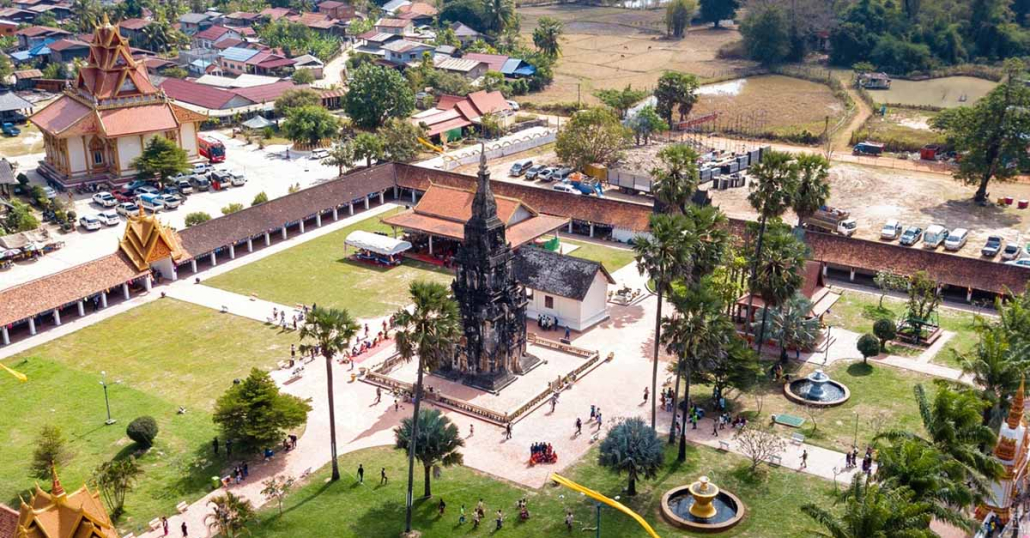
The third site, That Ing Hang in Savannakhet Province, is among the most sacred Buddhist monuments in the country. Built in 1560 by King Setthathirath of the Lan Xang kingdom on the site of a pre-existing Khmer temple, the stupa is believed to enshrine a relic of the Buddha’s collarbone. Its architecture reflects both Lao and Khmer influences, and it has drawn pilgrims for centuries. Restored significantly in the 19th century, it remains an active place of worship today.
UNESCO inscription brings legal frameworks for protection, international funding, and a level of visibility that can change how a place or practice is preserved for generations.
The nominations are expected to be developed and submitted across the 2026–2030 period.
source: https://laotiantimes.com/2026/03/04/laos-to-nominate-five-traditions-three-sites-for-unesco-status/

