
Standing Stones in Houaphanh Recognized as National Heritage
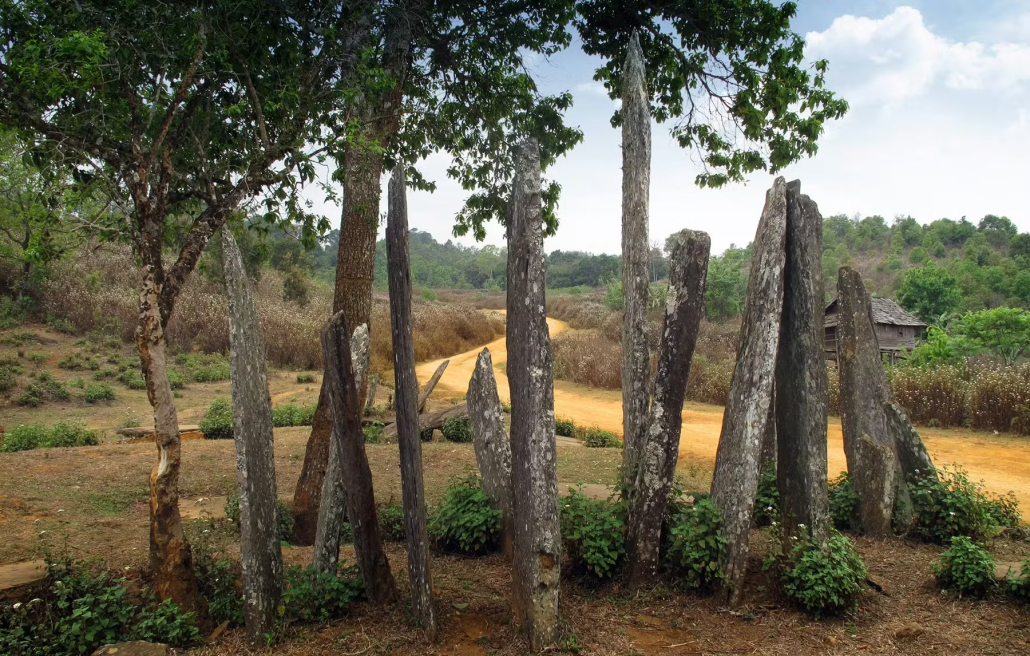
A group of ancient standing stones in Houaphanh Province has been officially recognised as a national cultural heritage site, drawing attention to one of Laos’ most puzzling historical locations.
Known as Hintang Archeological Park (Standing Stones), the site is located in Houameuang District, about 64 kilometers from the provincial center. The area contains more than 1,500 stone pillars and over 150 large stone discs spread across hills and forest.
The stones are believed to date back around 2,500 to 3,000 years, possibly to the Iron Age. However, experts still do not know who built them or why.
The stones are tall and narrow, often placed in groups with larger stones at the centre. There is no clear pattern in how they are arranged, which adds to the mystery.
The Secrets Beneath the Surface
Beneath some of the stones, archeologists have discovered underground chambers. These chambers are large and covered with heavy stone slabs, some over 2 metres wide.
Inside, the chambers are divided into smaller sections and may have been used for burials. However, very few human remains have been found, leaving many questions unanswered.
The site was first studied in 1931 by French archeologist Madeleine Colani, who uncovered clay jars and bronze bracelets during early excavations.
Despite decades of research, the true purpose of the stones remains unclear. Some believe they were linked to burial practices, while others suggest they may have spiritual or ceremonial meaning.
In recent years, authorities have carried out surveys and mapping of the area to better understand and protect the site. Key groups of stones have been identified in 2 villages, where conservation zones have now been established.
To Achieve Global Recognition
Officials say the new national heritage status will help protect the site and support further research. It may also help promote tourism in the future.
The government has also indicated plans to propose the site for UNESCO World Heritage status in the coming years. The push is part of a broader 2026-2030 national strategy, aimed at protecting Lao landmarks alongside cultural staples like ‘Laap’ and the ‘Baci’ ceremony.
For now, Hintang could become the second National Heritage site in Houaphanh, following the recognition of Viengxay’s historic caves, while remaining the most puzzling historical site, raising questions about the people who once lived there.
source: https://laotiantimes.com/2026/03/27/standing-stones-in-houaphanh-recognized-as-national-heritage/


