Laos and Japan have upgraded their relationship to a Comprehensive Strategic Partnership, marking 70 years of diplomatic ties and paving the way for closer collaboration in trade, travel, and regional cooperation.
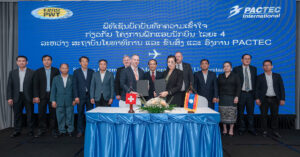
On 21 January, Lao Prime Minister Sonexay Siphandone and Japanese Prime Minister Ishiba Shigeru signed a joint declaration on upgrading to a comprehensive strategic partnership as part of Lao PM’s official visit to Japan from 20 to 23 January.
On the same day, the two leaders discussed strategies to strengthen trade, investment, and people-to-people exchanges.
Among the key announcements was Laos’ plan to extend visa-free stays for Japanese citizens from 15 to 30 days, as well as efforts to encourage the launch of direct flights between the two countries to boost economic and tourism ties.
The summit also underscored Japan’s longstanding role in Laos’ development. Prime Minister Sonexay Siphandone expressed gratitude for Japan’s Official Development Assistance (ODA), which averages USD 90 to 100 million annually, and has supported key sectors such as education, infrastructure, and unexploded ordnance (UXO) clearance.
The leaders also reflected on economic cooperation. Since Laos opened to foreign investment in 1989, Japan has invested in 93 projects with a total value exceeding USD 157 million, ranking as the 14th largest investor in Laos.
In 2024 alone, trade exceeded USD 255 million, marking a 10.4 percent increase compared to 2023. Major traded products include clothing, electrical equipment, land vehicles, and synthetic fibers.
As part of the visit, the two leaders witnessed the signing of a grant aid agreement for the Provincial Teacher Development Center Improvement Project, which aims to bolster Laos’ human resource development.
https://www.tourismlaos.org/wp-content/uploads/2025/01/JP-LAO.jpg6271200Sylivanla Vongphachanhhttps://www.tourismlaos.org/wp-content/uploads/2025/05/Lao-Simply-Beautiful-.webpSylivanla Vongphachanh2025-02-05 13:40:002025-01-28 13:41:38Laos, Japan Discuss Plans for Direct Flights, Visa Easing
Traditional silk tapestries from Xam Tai district in Houaphanh Province will soon be recognized as official One District One Product (ODOP), aiming to preserve and promote local craftsmanship.
On 15 January, the Houaphanh provincial committee for the ODOP initiative, in collaboration with the Xam Tai district committee, met to support the local silk weaving group as part of the program. The ODOP initiative seeks to boost the local economy by highlighting unique products that reflect the region’s rich cultural heritage.
Artisans in Xam Tai have long been known for their unique silk weaving traditions. These practices, maintained by the Lao Loum and Tai Daeng ethnic groups, have been passed down through generations, deeply rooted in both Buddhist and animist beliefs.
silk tapestries, which are often used as wall hangings or table coverings. These decorative textiles are more than just a craft because it holds spiritual significance, believed to promote healing and the well-being of both individuals and the community. While the process is intricate and collaborative, involving careful raising of silkworms, meticulous extraction and dyeing of silk threads using natural materials, and the creation of complex patterns and vibrant colors.
Each piece of silk often features traditional motifs, such as Nagas –river serpents– symbolizing female power, elephants representing political strength, and ancestor spirits believed to offer protection.
Weaving these complicated patterns requires months of dedication, mostly from women who craft each piece to support their families and contribute to the local economy. Their efforts also help preserve the cultural identity of their community.
Larsouk, a silk tapestry merchant from Xam Tai district, shared her insights on the craft saying, “Silk tapestries require more than three months to create a piece. My customers always prefer traditional patterns over modern ones. Due to the detailed and time-consuming process, the price in the Lao market starts at LAK 5 million and can go up to LAK 50 million.”
“I hope the Lao textile market expands, with more cultural events like fairs to promote Lao weaving domestically and internationally. I would love to see the beauty of Lao silk showcased to foreigners, so they can appreciate how beautiful it is,” she said.
Despite modern influences, the silk artists of Xam Tai remain committed to their traditional practices, finding ways to bring their creations to broader markets while safeguarding their heritage. This dedication ensures that the legacy of Xam Tai’s silk weaving will endure for future generations.
To sustain this program, the committee is also exploring ways to enhance visibility and sales, further integrating these traditional arts into modern markets and ensuring their continued growth and appreciation.
https://www.tourismlaos.org/wp-content/uploads/2025/01/textile.jpg6271200Sylivanla Vongphachanhhttps://www.tourismlaos.org/wp-content/uploads/2025/05/Lao-Simply-Beautiful-.webpSylivanla Vongphachanh2025-02-04 11:42:002025-01-20 11:43:58Xam Tai District’s Silk Tapestries Set to Achieve ODOP Status
On 16 January, Oudomxay officially launched its 2025 Ethnic Traditional Festival with the aim of promoting tourism.
The opening ceremony, held at the provincial stadium, drew both domestic and international visitors.
Bounkhong Lachiemphone, Secretary of the Party Committee and Governor of Oudomxay, highlighted the importance of each of the 12 ethnic groups in the province, including Lao, Hmong, Tai, Khmu, Bid, Leu, Yang, Lamed, Iu mien, Akha, Phounoy, and Hor. Each group brings its own traditions, languages, and lifestyles, and they have lived harmoniously, contributing to the province’s growth while preserving their unique cultures.
The festival features a variety of events, including an exhibition of local handicrafts, agricultural products, and souvenirs. Visitors can also participate in a forum offering information on government loans and guidance on selling products online. Cultural performances and activities will showcase the traditions of five ethnic groups—Khmu, Hmong, Hor, Tai Dam, and Lao.
Oudomxay is home to several natural attractions, including the Nam Kat waterfall, the Singkham Buddha temple, the panoramic views from Phu Ya Kha Mountain, and Tad Talae waterfall. The province is also renowned for its local cuisine, such as sop pak (vegetables cooked with sesame, ginger, and chili) and som seen sai mai phai (fermented pork mixed with chili and garlic, packed into bamboo tubes).
https://www.tourismlaos.org/wp-content/uploads/2025/02/Lao-Ethnic-1.webp6271200Sylivanla Vongphachanhhttps://www.tourismlaos.org/wp-content/uploads/2025/05/Lao-Simply-Beautiful-.webpSylivanla Vongphachanh2025-02-03 11:40:002025-03-28 22:06:18Oudomxay Launches Ethnic Traditional Festival to Promote Tourism in 2025
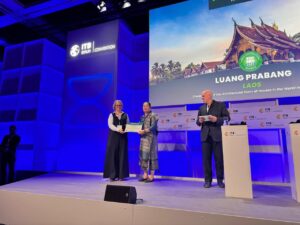
On 20 January, Laos received 29 ASEAN Tourism Standards Awards during the ASEAN Tourism Forum held in Johor, Malaysia. These accolades celebrate the country’s efforts in enhancing tourism quality, sustainability, and cultural preservation.
Among the awards, Laos earned four under the ASEAN Homestay Standard category, recognizing efforts to promote sustainable tourism. The honored homestays include one located in Vang Vieng district, Vientiane Province, and three in Champasak.
In addition, Laos secured five awards for the ASEAN Community-Based Tourism Standards, with notable recognition for wildlife viewing experiences at Nam Et-Phou Louey National Park in Houaphan Province. The remaining four awards went to community-based tourism initiatives in villages across Khammouane, Luang Namtha, and Luang Prabang provinces.
The country’s spa services also stood out, garnering five awards in the ASEAN Spa Services Standard category. Three awards were presented to spas in Luang Prabang: Amantaka Hotel, Ban Lao Spa of My Ban Lao, and Mekong Spa at Phou Vao Hotel. The Senses Spa at Crown Plaza Vientiane and Dalah Spa in Vientiane Capital also received recognition.
Furthermore, Laos excelled in the ASEAN Public Toilet Standard category, with five public facilities being awarded. These included toilets at Nong Sa Phang Lenh Park in Vientiane Capital, Xieng Thong Temple in Luang Prabang, Mountain View Restaurant in Luang Namtha, Tat Yeuang Waterfall in Champasak, and None-Nangfa Cave in Vang Vieng.
On top of receiving awards, Laos also achieved a milestone of tourist arrivals. In 2024, Luang Prabang welcomed over 2 million visitors, far exceeding its initial target of 900,000. This growth is credited to the country’s heightened visibility on international travel platforms and the success of the 2024 Visit Laos Year campaign.
The new Lao Art Museum officially opened on 5 January in Vientiane’s Nonsaart village, Xaythany district.
Construction of the Museum began in 2021 with a budget of over USD 50 million.
Covering 80 hectares, the museum complex currently features four zones, including the information building and a reception area, an arts and culture exhibition hall, an observation hall, and a multi-purpose building.
However, construction is still ongoing with more facilities expected to open throughout the year. The venue is scheduled to be finalized by mid-February with wood carvings and paintings, souvenirs shop, restaurant and beverage options, an artificial waterfall and other attractions.
The hotels and resorts are currently under construction under Phase 2 of the plan. The completion date is yet to be identified.
This new landmark is set to become a major tourist destination while offering a space for learning and conservation.
After the grand opening, some people expressed concerns, particularly about the museum’s readiness. While the official opening is scheduled for mid-February, some visitors have raised concerns about the museum’s readiness for public access. Questions about areas still under construction and the entrance fee have been circulating.
Areya Sayathith, Executive Director of the Lao Art Museum, addressed these concerns, explaining that certain zones are accessible to visitors, but some areas remain closed for construction and are not yet ready for public viewing.
“The reason why we are still unable to welcome tourists is because we do not have enough staff, the management system is not systematic, security staff and system, and some zones are not 100 percent complete,” she said.
While some users offered congratulations to the Lao Art Museum for its beauty and traditional art, others are asking for clearer information.
Stephan R. Aeschbach, President of J&C Group, living and working in Laos for over 23 years, had the chance to visit the Lao Art Museum shortly after the opening.
“I’m incredibly excited that Laos now boasts such a magnificent landmark, a must-see destination for all visitors to the country, I am confident that it will showcase a wider range of Laotian art, become a hub for artistic interaction and exchange, and offer a diverse array of workshops for artists” he said.
“The museum is a stunning sight, particularly the dramatic entrance via a floating stage across the lake. While still under construction, the sheer scale and beauty of this project are already impressive.”
But aside from the beauty and grandeur of the new structure, he has reservations regarding the entrance fees.
“Considering the museum is still under construction, with many facilities and areas remaining closed, and the current exhibit primarily focuses on wooden carvings, the entrance fee of USD 15 for foreigners (LAK 100,000 for Lao citizens) seems rather high. Once construction is complete, all facilities are open to the public, and a diverse collection of Lao art is on display, this entrance fee may become more appropriate” Aeschbach said.
The full entry fee for Lao nationals is LAK 100,000, while for foreigners, it is LAK 220,000 or USD 15. However, foreigners currently pay only USD 10 because some parts of the museum are not yet open for viewing. Tourists can pay by cash, credit card or bank transfer. An online booking system will be available in the future.
The museum is open daily from 8:00 AM to 7:00 PM, with the last entry at 4:00 PM.
https://www.tourismlaos.org/wp-content/uploads/2025/01/The-Lao-Art-Museum-1.webp6271200Sylivanla Vongphachanhhttps://www.tourismlaos.org/wp-content/uploads/2025/05/Lao-Simply-Beautiful-.webpSylivanla Vongphachanh2025-01-31 11:38:072025-03-28 22:04:32Lao Art Museum Draws Praise, Criticism Over Entry Fee, Construction Delays
Disorganized parking at Patuxay Park in Vientiane continues to raise concerns among residents, prompting the local authorities to take action.
On 8 January, the Vientiane Capital Department of Public Works and Transport, in collaboration with the Vientiane Urban Services Management Office (VUSMO) and the Traffic Police Department, conducted an inspection and issued guidance on proper parking practices.
The inspection revealed that many vehicles, including tourist buses and private cars, continued to be parked chaotically, creating safety hazards and disrupting traffic flow.
Officials called on drivers to follow parking rules to ensure order in the area.
The new parking guidelines, which apply to key tourist locations such as Patuxay and That Luang, allow tourist buses and vans to park temporarily (3-5 minutes) for passenger pick-up or drop-off. Violators will face fines ranging from LAK 1 million to 10 million (approximately USD 46 to 460).
In addition, plans are underway to introduce electric minibuses at That Luang to reduce road vibrations and preserve the site’s foundation.
Looking ahead, The government plans to extend these parking regulations to other major tourist sites, including the Mekong Riverside, Wat Si Muang, and Ho Phrakeo temples, ensuring a safer and more organized experience for visitors.
In 2024, more than 300,000 people visited Vientiane’s main tourist attractions, contributing more than LAK 9 billion (over USD 400,000) to the local economy.
Khampueang Vongchandy, Deputy Director of Vientiane Museum and Archaeology Department, noted the significant rise in tourism in the capital during the Visit Laos Year 2024 campaign, state media reported. The tourism year resulted in a large number of tourists flocking to visit Vientiane’s primary tourist attractions, including That Luang, Hor Pha Keo and Sisaket temple.
A total 322,760 people visited those three sites, including 289,749 international travelers and 33,014 domestic visitors. South Korea topped the list of countries sending the most tourists, followed by Thailand, China, Europe, and others.
A breakdown of visitors to each site includes 171,245 at That Luang, 81,035 at Hor Pha Keo and 70,245 at Sisaket Temple, building on significant growth compared to 2023.
Also, a total of 106 foreign delegations visited the sites, bringing 4,225 guests alongside 3,068 students.
Vientiane has worked to improve these three tourist sites over the past year to attract more visitors. In 2025, further upgrades are planned, including improvements to ticket booths, flower gardens, offices, and herb gardens. More focus will also be given to advertising through newspapers, TV, radio, online platforms, and the official website to raise global awareness and encourage more visitors.
https://www.tourismlaos.org/wp-content/uploads/2025/01/3-Tourist-sites.jpg6271200Sylivanla Vongphachanhhttps://www.tourismlaos.org/wp-content/uploads/2025/05/Lao-Simply-Beautiful-.webpSylivanla Vongphachanh2025-01-29 09:35:482025-01-10 09:37:17Vientiane’s Top Tourist Sites Attract Over 300,000 Visitors in 2024
Construction of the fifth “Friendship Bridge” across the Mekong River, linking Bolikhamxay Province in Laos and Bueng Kan Province in Thailand, is now 96.64 percent complete.
The project is on track to finish on schedule, with plans to lay the final concrete in March, connecting the two sides of the bridge at the central point. The official opening ceremony is set for May 2025.
The completion and opening of the bridge will coincide with the celebration of the 75th anniversary of Lao-Thai diplomatic relations.
By providing a more direct route along the East-West Economic Corridor, the bridge aims to reduce travel time and logistics costs for businesses operating between these countries.
Bolikhamxay, located near Vietnam’s eastern border, is close to Vinh, a major city in Vietnam and a key point on the East-West Economic Corridor linking Myanmar, Thailand, Laos, and Vietnam.
The first four bridges across the Mekong River between Laos and Thailand have already established direct road links between Vientiane and Nong Khai, Savannakhet and Mukdahan, Khammouan and Nakhon Phanom, and Huayxai and Chiang Khong.
https://www.tourismlaos.org/wp-content/uploads/2025/01/5th-Lao-Thai-Friendship-Bridge.jpg6271200Sylivanla Vongphachanhhttps://www.tourismlaos.org/wp-content/uploads/2025/05/Lao-Simply-Beautiful-.webpSylivanla Vongphachanh2025-01-28 09:33:432025-01-10 09:35:10New Lao-Thai Bridge Close to Completion
Vientiane Province is once again in the spotlight with a fresh tourism draw—the newly upgraded Nam Ngum 1 Reservoir Recreation Area, also known as “Nam Ngum 1 Reservoir” or “Thalay Lao,” meaning the Lao Sea.
Located in Keooudom District, the reservoir officially reopened on 3 December after a three-year closure for extensive redevelopment.
“We are expecting at least 1-2 million visitors to visit this place in 2025,” said Sisavath Sengphachan, Vientiane Province’s Head of Information, Culture, and Tourism, who oversees the facility. “We have it all here—nature, food, interesting historical background, and, of course, it’s all environmentally friendly.”
The reservoir’s main area, the marina, now boasts 36 boats connected to on-site restaurants.
Visitors are greeted by an entry gate, parking facilities, and a circular viewing pavilion. For those seeking scenic views, the site offers three viewing points, a stepped viewing platform, and walkways leading to boat restaurants.
Redevelopment, Compensation, and Green Efforts
This redevelopment not only enhances the tourism appeal of Vientiane Province but also brings upgrades to surrounding infrastructure. The 6.3-kilometer access road to the site has been transformed into a concrete pathway, linking the reservoir to Highway No.10. Internal roads and side streets within the port area have also been refurbished, making it easier for visitors to navigate the site.
The walkway at the site where shops are located.
However, the redevelopment process was not without its challenges. To facilitate the project, the government relocated residents who had once lived in the area. The head of Vientiane’s tourism department explained that the Nam Ngum 1 Reservoir site was originally a village inhabited by fishing enthusiasts.
Despite the relocation, Sisavath assured that the affected residents were compensated. Nineteen families considered to have “special needs” were selected for full relocation support. “We granted them land about 3 kilometers from here and provided the necessary funds for their move,” he said.
One of the shopkeepers, who was part of the 19 families originally residing at the site, shared her experience of being relocated during the construction period.
“They provided us with money to build a house to stay in for three years during the redevelopment,” said the woman, who had lived in the area for 30 years and now operates a snack shop at the site. She noted that project officials regularly checked how the compensation funds were being used.
“They paid us compensation every six months from the start of construction until it was completed,” she added.
In addition to the financial support, the woman mentioned that the government occasionally treated them to meals as part of their compensation efforts.
After the redevelopment was completed, she said that they were allowed to return to the newly developed site.
“To compensate for the relocation, they let us stay here rent-free for one year,” she said, adding that she would start paying land fees beginning 3 December, 2025.
Sisavath then highlighted the environmentally-friendly initiatives at the Nam Ngum 1 Reservoir, emphasizing efforts to enhance the area’s greenery.
He also noted that the construction team made a conscious effort to preserve the existing vegetation during the development process.
“I know the trees and plants here don’t look very appealing right now,” Sisavath admitted. “But we’re going to plant even more moving forward. I’m confident this place will feel much more natural by next year.”
Challenges, Measures for Sustainability, Waste Management
Maintaining cleanliness is another priority at the facility.
“We have three types of bins,” Sisavath said, emphasizing the importance of maintaining an environmentally friendly space.
“Yellow bins are for recyclable trash, red bins are for hazardous waste, and green bins are for garbage that can be turned into fertilizer.”
Despite these measures, proper waste disposal remains a challenge, according to him.
“Many people do not have it in them to properly dispose of their waste,” he said.
To address this, the Lao government has been conducting training sessions for entrepreneurs and tour guides, who play a crucial role in educating both locals and visitors.
“Many tourists have different backgrounds, which is why we need to ensure guides understand how serious we are about keeping the environment clean so they can pass this information to tourists,” Sisavath emphasized.
However, challenges extend beyond waste management. The marina’s fleet is not fully ready, with only 20 out of 36 boats currently operational, and just five meeting the required standards.
Deputy Head of Information, Culture, and Tourism, Khammy Phoutthavong, outlined plans to address this issue, stating that by 2025, they aim to have at least 25 to 30 boats meet the required standards.
Boats at the Nam Ngum 1 Resevoir’s Marina
Each boat is required to have a waste tank to manage sewage, but Khammy explained that some boats not meeting these standards are still allowed to operate.
“Why do we let the other boats [that don’t meet the standard] operate? It’s because it’s a tradition to allow them, even if they don’t meet the new standards.”
He added that these boats were already in operation before the redevelopment of Nam Ngum 1 Reservoir and before the current standards were introduced.
This leniency, he said, also helps compensate for the long hiatus the boats faced during the facility’s redevelopment into the Nam Ngum 1 Reservoir.
Although the boats are ready to operate, Khammy noted that they currently cannot take visitors to the surrounding islands, as those are still under development. He expects island visits to begin by mid-2025.
Positive Reactions from Locals and Tourists
Despite the lengthy redevelopment, the project has garnered positive feedback from both locals and tourists.
“Since the reopening of the site, I’ve had a lot of tourists hiring me to drive them to the reservoir,” said a local driver.
Another resident, Khamvaen, who runs a traditional handicraft souvenir shop at the site, also expressed her happiness with the redevelopment.
“We’ve seen a lot of tourists coming to see us, especially in my shop,” said Khamvaen, who just opened her store after the redevelopment.
Her shop offers a variety of handicrafts, including traditional snacks, scarves, sticky rice baskets, and traditional medicine. “More tourists means more profit for us,” she added. “Every handicraft in my shop is handmade, deliberately crafted by a talented local team, which adds value to them.”
Khamvaen mentioned that most tourists who have visited so far are Chinese, rather than Westerners. However, while the influx of tourists is beneficial, she highlighted a significant challenge: the language barrier.
“I have to use sign language to communicate with the Chinese tourists most of the time,” she said, adding that it would be helpful if the Lao government could offer a basic Chinese language course to assist shopkeepers.
Another resident, Xayadeth, the new owner of the Daolormduean boat restaurant at the site, who took over from the previous owner, also shared his excitement.
“Coming here has been a blessing,” said Xayadeth. “My restaurant is usually packed with visitors in the afternoon and reaches its peak during the weekend when the site sees a large influx of tourists.”
The Nam Ngum Reservoir project was supported by the Asian Development Bank (ADB), with a total investment of USD 5.33 million. Spearheaded by the Ministry of Information, Culture, and Tourism, construction began on 1 July, 2021, and reached completion on 30 October this year. Khamfong Group Sole Co., Ltd., served as the primary construction contractor.
With its focus on sustainability, accessibility, and cultural preservation, the Nam Ngum Reservoir Recreation Area marks a new chapter for Vientiane Province’s tourism sector.
Xayaboury Province is set to host the traditional Phi Ta Khon Festival– or Masked Ghost Festival, from 5 to 12 February at Sibounhueng Temple in Yai Village. This annual event is a highlight of the region, combining the popular Boun Pha Vet Festival–or Prince Vessantara Festival, with the unique tradition of Phi Ta Khon, or “masked ghosts.”
The roots of the Phi Ta Khon Festival trace back to the Buddhist tale of Prince Vessantara, or commonly called Phavet by Lao People. In Buddhist tradition, Prince Vessantara is revered for his boundless generosity.
According to the legend, when the prince returned to the city after years of exile in the forest, he was accompanied by spirits and forest guardians for protection. This procession of “ghosts” symbolized the bond between the spiritual and human worlds.
The Lao saying “Phi tam khon,” meaning “ghosts follow people,” reflects this tale. Over generations, the phrase evolved into “Phi Ta Khon,” and the procession of masked figures became a unique feature of Xayaboury’s Boun Pha Vet celebrations.
The masks used in the festival symbolize the creativity and imagination of Paklai’s ancestors. Made from bamboo, the masks are characterized by their oversized heads, long noses, extended tongues, and exaggerated ears. They are often inscribed with playful or romantic phrases in Lao, representing the joyous and lighthearted spirit of the festival.
These masked figures, dressed in colorful attire, parade through the streets, making unique sounds and bringing life to the festival.
For the people of Xayaboury, the Phi Ta Khon Festival is more than just a celebration; it is a way to preserve and pass down their cultural heritage to future generations.