As 2025 kicks off, Khammouane Province is setting its sights on boosting tourism and drawing in more visitors this year.
The province is ready to become a top spot for both local and international travelers, according to Somsackda Keomany, Deputy Head of the Provincial Information, Culture, and Tourism Department.
In 2024, Khammouane welcomed over 800,000 tourists, generating LAK 1,000 billion (USD 46 million) in revenue.
This year, local authorities are rolling out a range of new initiatives to improve the visitor experience and make travel more seamless for everyone. With this goal in mind, the province aims to build on this success and further establish itself as a top travel destination in Laos.
This approach not only aims to enhance the visitor experience but also focuses on sustainability and responsible tourism practices, state media reported.
The province is now offering a wider range of activities, including zip-lining, rock climbing, camping, kayaking, homestays, and hiking. In the past, Khammouane hosted events like boxing, football, and cycling competitions involving participants from Laos and Thailand.
Other tourist attractions also include environmentally friendly experiences that connect with the local communities.
Kong Lor Cave
But the province is also home to significant historical and natural sites such as That Sikhottabong, Buddha Cave (Tham Pa Fa), and Paseuam Cave. Other popular destinations include Khoun Kong Leng Blue Lagoon, Xe Bang Fai River Cave, and Tat Sieng Lue Waterfall, a newly developed eco-tourism site.
Among the most visited attractions is The Rock Viewpoint, which has quickly become a favorite for both domestic and international tourists since its opening in late 2019.
https://www.tourismlaos.org/wp-content/uploads/2025/02/KHAMMOUANE-WP.jpg6271200Sylivanla Vongphachanhhttps://www.tourismlaos.org/wp-content/uploads/2025/05/Lao-Simply-Beautiful-.webpSylivanla Vongphachanh2025-02-12 11:14:222025-02-03 11:15:45Khammouane Sets Sights on Tourism Boom in 2025 with New Attractions, Eco-Friendly Initiatives
The Lao Child and Youth Development Association (LaoCYDA) has been officially established in Laos.
With the approval by the Ministry of Home Affairs (MoHA) and all key ministries, this step marks a significant milestone toward advancing child rights, child protection, and youth empowerment across the country.
As a locally-led civil society organization, LaoCYDA is now fully eligible to implement development programs nationwide, partnering with key government ministries, donors, and international stakeholders to create a lasting impact for children and youth.
“We are honored to have received official approval and support from the Ministry of Home Affairs (MoHA) and all key ministries involved in national development. This empowers LaoCYDA to operate nationwide, advancing our mission to protect and uplift the children and youth of Laos,” stated Somkiao Kingsada, Board Chair of LaoCYDA.
LaoCYDA will work in close collaboration with the Ministry of Education and Sports, Ministry of Health, Ministry of Labour and Social Welfare, Ministry of Agriculture and Forestry, Ministry of Home Affairs, Ministry of Natural Resources and Environment, Lao Youth Union, and Lao Women’s Union to ensure that its programs align with Laos’ National Youth and Adolescent Development Strategy and the country’s Sustainable Development Goals.
The organization is committed to strengthening child rights and child protection frameworks across the country, ensuring that every child has the opportunity to grow up in a safe, nurturing environment. LaoCYDA’s key focus areas include education, health, climate action, youth empowerment, and sustainable livelihoods, working to equip children and youth with the skills and opportunities they need to thrive.
In Laos, efforts are focused on ensuring the safety, well-being, and rights of every child. Key priorities include improving access to quality education, especially in remote areas, and promoting mental, sexual, and emotional health for youth. Programs engage young people in addressing climate change and developing leadership, job readiness, and life skills through community-based initiatives. Support is also provided to foster sustainable livelihoods through agricultural innovation and climate-resilient practices.
LaoCYDA also emphasizes the importance of collaboration and partnership. As a newly formed organization, it looks forward to working hand-in-hand with government ministries, donors, United Nations agencies, international NGOs, local communities, and all development partners to create transformative and impactful programs for the children and youth of Laos.
LaoCYDA extends special thanks to the Lao Civil Society Organization Secretariat and its leadership for their generous support and provision of office space during this crucial period of establishment. This support enables LaoCYDA to hit the ground running and contribute to national and community development efforts.
“We are ready to collaborate and partner with all stakeholders to build a brighter future for Lao children and youth. With our official approval and nationwide eligibility, LaoCYDA is inspired and motivated to make a significant impact in 2025 and beyond,” said Vilasai Thammavong, Founder and Director of LaoCYDA.
For partnership inquiries or more information, please contact LaoCYDA through our social media platforms or via email at laocyda.info@gmail.com
Tanu has been singing his whole life. Born and raised in Vientiane, this popular Lao singer-songwriter started performing as a child and never stopped. From school competitions to late-night gigs, music has always been a part of his life.
Now, after years of honing his craft, he’s become one of the most recognizable voices in Laos’s indie music scene.
“I never expected to come this far—to be well-known or make a living from music,” said the 27-year-old artist.
Genuine passion can sometimes lead to success beyond one’s imagination, or at least, it is what Tanu has proven.
“I started singing when I was in sixth grade and always participated in school competitions,” Tanu recalls. “By the time I was in tenth grade, I had already begun performing as a night singer, and I’ve continued ever since.”
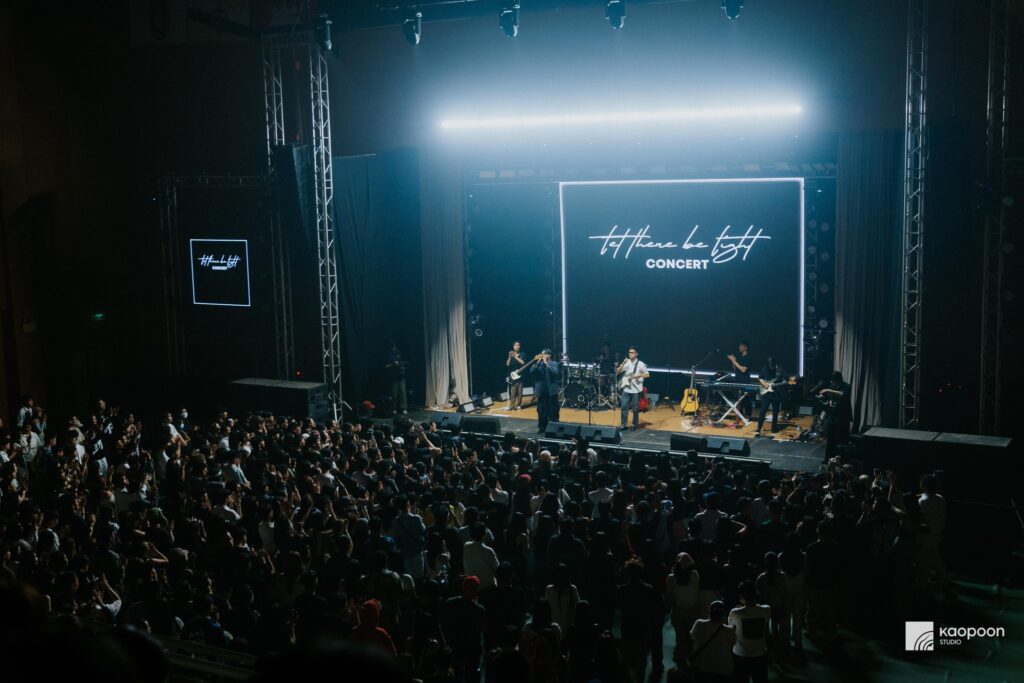
His soaring popularity has granted him a stage at the National Cultural Hall on 15 February, where “The Song Beyond Borders” is set to take place, celebrating 70 years of Laos-Japan diplomatic relations
There, the young artist would share the stage with “Krage”, a Japanese hip hop singer, in a night of musical exchange.
For Tanu, this moment is not just about performing but it’s a milestone in a journey that began when he was just a schoolboy with a dream.
Music has always been a part of his life. From competing in school events to singing in bars at night, Tanu’s voice became his identity. But as he grew as a performer, he felt the urge to create something of his own. That’s when he started writing his own songs.
Not Just One Sound
Today, after years of practice, Tanu enjoys experimenting with different styles. In his early years, he focused on creating songs that would appeal to a wide audience. But as he grew as an artist, his approach shifted.
“My music style isn’t fixed—I experiment with different genres,” he said.
His earlier songs, for instance Tear and Pure, were composed with listeners in mind. But in recent years, he has focused on making music that reflects his personal taste, even if it’s less commercially successful. Now, he hopes to find a balance between both approaches.
A Rainy Breakthrough
While Tanu’s first composition, Only Tears Remain, was released in 2019, it was “ Fon“ (Rain), which was released in 2022 that truly put him on the map.
“One of my most well-known songs is ຝົນ (Fon). I was really happy to see it become popular,” he shares.
Originally, Rain was supposed to be his third release, but delays—including a key collaborator being out of the country—pushed it back. Looking back, he believes that waiting allowed the song to reach its full potential.
A Milestone: His latest Solo Concert
Tanu’s solo concert in November 2024 was a defining moment in his career. Unlike his previous performances as an invited artist to perform with other artists, but this time he was involved in every aspect of the production.
“My solo concert in November 2024 was a huge challenge. We had to manage everything ourselves—from designing the event concept to organizing the entire show.”
From conceptualizing the event to securing sponsors, every detail required careful planning. He and his team wanted to create something fresh for the audience—something rarely seen in Laos’ music industry.
The overwhelming response to the concert proved that Lao audiences are eager to support local artists when presented with something authentic and meaningful.
However, breaking into the Lao music industry comes with its own challenges, especially when local artists compete with the influence of foreign music.
“The music industry in our country is very small,” Tanu admitted.
“There’s a belief that Lao people overlook local artists, so we wanted to see how they would respond to our concert. The turnout was overwhelming, proving that there is strong support for Lao musicians.”
Advice for Aspiring Artists
For those hoping to enter the music industry, Tanu emphasizes the importance of enjoying the process.
“It doesn’t hurt to try. Many people set high expectations for their work, but it’s also important to enjoy the small moments along the way,” he advised.
“Music should be fun. If you truly love making music, it will reward you in unexpected ways”.
Looking Ahead: The Future of Tanu’s Music
Though music has been a major part of his life, Tanu is considering stepping away from the industry in the near future.
“In the next five years, I plan to step back from the music industry in Laos,” he revealed.
While he still enjoys performing, he admits that the demands of the industry can be exhausting.
“But I will probably continue performing at night venues since that’s my main source of income. In five years ahead, I don’t have any definite plans, I may work behind the artist’s performance or production rather than doing it by myself,” he added.
Despite the uncertainties ahead, one thing remains clear, music will always be part of Tanu’s life. Whether he’s on stage, writing behind the scenes, or simply playing for himself. His journey with music isn’t over.
https://www.tourismlaos.org/wp-content/uploads/2025/02/Tanu1.jpg6271200Sylivanla Vongphachanhhttps://www.tourismlaos.org/wp-content/uploads/2025/05/Lao-Simply-Beautiful-.webpSylivanla Vongphachanh2025-02-10 11:09:412025-02-03 11:11:14Tanu Vannasin: From School Competitions to Laos’ National Music Stage
In 2024, Laos welcomed more than 4 million tourists, with an increase of almost one million visitors compared to 2023.
According to data provided to the Laotian Times by the Ministry of Information, Culture and Tourism, in 2024 a total of 4,120,832 tourists visited Laos
The top 10 countries contributing to this success with the highest number of visitors were Thailand, Vietnam, China, Korea, France, Russia, the United States, and the United Kingdom .
Thailand led the way with 1,215,553 tourists, followed by Vietnam with 1,054,204, and China with 1,048,034.
The rise in visitor numbers to Laos is attributed to the country’s increased exposure on several international travel websites as well as the success of the 2024 Visit Laos Year campaign. As part of this initiative, Laos granted special visa exemptions to more than 30 countries, including China, the United States, and eight European countries.
In October, Laos was ranked fourth on the list of the Top 30 Best Places to Visit in 2025 by the travel guidebook “Lonely Planet.” The top five destinations include Cameroon, Lithuania, Fiji, Laos, and Kazakhstan.
https://www.tourismlaos.org/wp-content/uploads/2025/02/2048-x-1365-2-1.webp13652048Sylivanla Vongphachanhhttps://www.tourismlaos.org/wp-content/uploads/2025/05/Lao-Simply-Beautiful-.webpSylivanla Vongphachanh2025-02-07 11:07:072025-03-28 20:45:30Laos Welcomes Over 4 Million Tourists in 2024
Xayaboury authorities have confirmed the 2025 Elephant Festival on 18 to 24 February, celebrating Laos’ culture with parades of elephants, traditional rituals, and vibrant performances.
The decision aims to avoid overlapping with Lunar New Year celebrations and the Bokeo Province Kapok Flower Festival.
Marking its 18th edition, the festival will feature 50 elephants, representing the number of years since Lao National Day was established.
The festivities will begin on 18 February with a mini-marathon, a traditional ritual to notify spirits, and elephant rides, which will culminate in an evening literary performance.
Throughout the week, visitors can enjoy rehearsals of the grand elephant parades, cultural showcases by ethnic groups, and the opening of a market offering local and international goods.
The official opening ceremony on 22 February will feature a paramotor flight show, hot air balloon rides, and visits to landmarks including Khy Min Cliffs, Xang Cliffs, and the Xayaboury Hydroelectric Power Plant.
Other key attractions include the Miss Elephant Festival Contest, a merit-making ceremony for the elephants, and an array of cultural performances and concerts.
The festival will close on 24 February with a ceremony honoring elephants and awarding prizes for each city’s parade.
https://www.tourismlaos.org/wp-content/uploads/2025/02/ef3.jpg6271200Sylivanla Vongphachanhhttps://www.tourismlaos.org/wp-content/uploads/2025/05/Lao-Simply-Beautiful-.webpSylivanla Vongphachanh2025-02-06 11:04:512025-02-03 11:06:34Xayaboury Confirms Elephant Festival on 18-24 February
Laos and Japan have upgraded their relationship to a Comprehensive Strategic Partnership, marking 70 years of diplomatic ties and paving the way for closer collaboration in trade, travel, and regional cooperation.
On 21 January, Lao Prime Minister Sonexay Siphandone and Japanese Prime Minister Ishiba Shigeru signed a joint declaration on upgrading to a comprehensive strategic partnership as part of Lao PM’s official visit to Japan from 20 to 23 January.
On the same day, the two leaders discussed strategies to strengthen trade, investment, and people-to-people exchanges.
Among the key announcements was Laos’ plan to extend visa-free stays for Japanese citizens from 15 to 30 days, as well as efforts to encourage the launch of direct flights between the two countries to boost economic and tourism ties.
The summit also underscored Japan’s longstanding role in Laos’ development. Prime Minister Sonexay Siphandone expressed gratitude for Japan’s Official Development Assistance (ODA), which averages USD 90 to 100 million annually, and has supported key sectors such as education, infrastructure, and unexploded ordnance (UXO) clearance.
The leaders also reflected on economic cooperation. Since Laos opened to foreign investment in 1989, Japan has invested in 93 projects with a total value exceeding USD 157 million, ranking as the 14th largest investor in Laos.
In 2024 alone, trade exceeded USD 255 million, marking a 10.4 percent increase compared to 2023. Major traded products include clothing, electrical equipment, land vehicles, and synthetic fibers.
As part of the visit, the two leaders witnessed the signing of a grant aid agreement for the Provincial Teacher Development Center Improvement Project, which aims to bolster Laos’ human resource development.
https://www.tourismlaos.org/wp-content/uploads/2025/01/JP-LAO.jpg6271200Sylivanla Vongphachanhhttps://www.tourismlaos.org/wp-content/uploads/2025/05/Lao-Simply-Beautiful-.webpSylivanla Vongphachanh2025-02-05 13:40:002025-01-28 13:41:38Laos, Japan Discuss Plans for Direct Flights, Visa Easing
Traditional silk tapestries from Xam Tai district in Houaphanh Province will soon be recognized as official One District One Product (ODOP), aiming to preserve and promote local craftsmanship.
On 15 January, the Houaphanh provincial committee for the ODOP initiative, in collaboration with the Xam Tai district committee, met to support the local silk weaving group as part of the program. The ODOP initiative seeks to boost the local economy by highlighting unique products that reflect the region’s rich cultural heritage.
Artisans in Xam Tai have long been known for their unique silk weaving traditions. These practices, maintained by the Lao Loum and Tai Daeng ethnic groups, have been passed down through generations, deeply rooted in both Buddhist and animist beliefs.
silk tapestries, which are often used as wall hangings or table coverings. These decorative textiles are more than just a craft because it holds spiritual significance, believed to promote healing and the well-being of both individuals and the community. While the process is intricate and collaborative, involving careful raising of silkworms, meticulous extraction and dyeing of silk threads using natural materials, and the creation of complex patterns and vibrant colors.
Each piece of silk often features traditional motifs, such as Nagas –river serpents– symbolizing female power, elephants representing political strength, and ancestor spirits believed to offer protection.
Weaving these complicated patterns requires months of dedication, mostly from women who craft each piece to support their families and contribute to the local economy. Their efforts also help preserve the cultural identity of their community.
Larsouk, a silk tapestry merchant from Xam Tai district, shared her insights on the craft saying, “Silk tapestries require more than three months to create a piece. My customers always prefer traditional patterns over modern ones. Due to the detailed and time-consuming process, the price in the Lao market starts at LAK 5 million and can go up to LAK 50 million.”
“I hope the Lao textile market expands, with more cultural events like fairs to promote Lao weaving domestically and internationally. I would love to see the beauty of Lao silk showcased to foreigners, so they can appreciate how beautiful it is,” she said.
Despite modern influences, the silk artists of Xam Tai remain committed to their traditional practices, finding ways to bring their creations to broader markets while safeguarding their heritage. This dedication ensures that the legacy of Xam Tai’s silk weaving will endure for future generations.
To sustain this program, the committee is also exploring ways to enhance visibility and sales, further integrating these traditional arts into modern markets and ensuring their continued growth and appreciation.
https://www.tourismlaos.org/wp-content/uploads/2025/01/textile.jpg6271200Sylivanla Vongphachanhhttps://www.tourismlaos.org/wp-content/uploads/2025/05/Lao-Simply-Beautiful-.webpSylivanla Vongphachanh2025-02-04 11:42:002025-01-20 11:43:58Xam Tai District’s Silk Tapestries Set to Achieve ODOP Status
On 16 January, Oudomxay officially launched its 2025 Ethnic Traditional Festival with the aim of promoting tourism.
The opening ceremony, held at the provincial stadium, drew both domestic and international visitors.
Bounkhong Lachiemphone, Secretary of the Party Committee and Governor of Oudomxay, highlighted the importance of each of the 12 ethnic groups in the province, including Lao, Hmong, Tai, Khmu, Bid, Leu, Yang, Lamed, Iu mien, Akha, Phounoy, and Hor. Each group brings its own traditions, languages, and lifestyles, and they have lived harmoniously, contributing to the province’s growth while preserving their unique cultures.
The festival features a variety of events, including an exhibition of local handicrafts, agricultural products, and souvenirs. Visitors can also participate in a forum offering information on government loans and guidance on selling products online. Cultural performances and activities will showcase the traditions of five ethnic groups—Khmu, Hmong, Hor, Tai Dam, and Lao.
Oudomxay is home to several natural attractions, including the Nam Kat waterfall, the Singkham Buddha temple, the panoramic views from Phu Ya Kha Mountain, and Tad Talae waterfall. The province is also renowned for its local cuisine, such as sop pak (vegetables cooked with sesame, ginger, and chili) and som seen sai mai phai (fermented pork mixed with chili and garlic, packed into bamboo tubes).
https://www.tourismlaos.org/wp-content/uploads/2025/02/Lao-Ethnic-1.webp6271200Sylivanla Vongphachanhhttps://www.tourismlaos.org/wp-content/uploads/2025/05/Lao-Simply-Beautiful-.webpSylivanla Vongphachanh2025-02-03 11:40:002025-03-28 22:06:18Oudomxay Launches Ethnic Traditional Festival to Promote Tourism in 2025
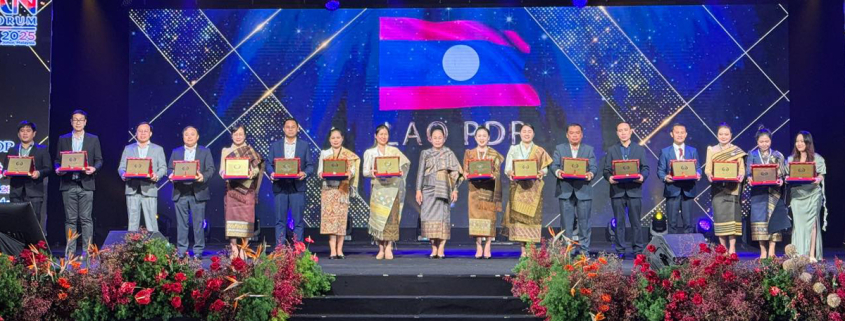
On 20 January, Laos received 29 ASEAN Tourism Standards Awards during the ASEAN Tourism Forum held in Johor, Malaysia. These accolades celebrate the country’s efforts in enhancing tourism quality, sustainability, and cultural preservation.
Among the awards, Laos earned four under the ASEAN Homestay Standard category, recognizing efforts to promote sustainable tourism. The honored homestays include one located in Vang Vieng district, Vientiane Province, and three in Champasak.
In addition, Laos secured five awards for the ASEAN Community-Based Tourism Standards, with notable recognition for wildlife viewing experiences at Nam Et-Phou Louey National Park in Houaphan Province. The remaining four awards went to community-based tourism initiatives in villages across Khammouane, Luang Namtha, and Luang Prabang provinces.
The country’s spa services also stood out, garnering five awards in the ASEAN Spa Services Standard category. Three awards were presented to spas in Luang Prabang: Amantaka Hotel, Ban Lao Spa of My Ban Lao, and Mekong Spa at Phou Vao Hotel. The Senses Spa at Crown Plaza Vientiane and Dalah Spa in Vientiane Capital also received recognition.
Furthermore, Laos excelled in the ASEAN Public Toilet Standard category, with five public facilities being awarded. These included toilets at Nong Sa Phang Lenh Park in Vientiane Capital, Xieng Thong Temple in Luang Prabang, Mountain View Restaurant in Luang Namtha, Tat Yeuang Waterfall in Champasak, and None-Nangfa Cave in Vang Vieng.
On top of receiving awards, Laos also achieved a milestone of tourist arrivals. In 2024, Luang Prabang welcomed over 2 million visitors, far exceeding its initial target of 900,000. This growth is credited to the country’s heightened visibility on international travel platforms and the success of the 2024 Visit Laos Year campaign.
The new Lao Art Museum officially opened on 5 January in Vientiane’s Nonsaart village, Xaythany district.
Construction of the Museum began in 2021 with a budget of over USD 50 million.
Covering 80 hectares, the museum complex currently features four zones, including the information building and a reception area, an arts and culture exhibition hall, an observation hall, and a multi-purpose building.
However, construction is still ongoing with more facilities expected to open throughout the year. The venue is scheduled to be finalized by mid-February with wood carvings and paintings, souvenirs shop, restaurant and beverage options, an artificial waterfall and other attractions.
The hotels and resorts are currently under construction under Phase 2 of the plan. The completion date is yet to be identified.
This new landmark is set to become a major tourist destination while offering a space for learning and conservation.
After the grand opening, some people expressed concerns, particularly about the museum’s readiness. While the official opening is scheduled for mid-February, some visitors have raised concerns about the museum’s readiness for public access. Questions about areas still under construction and the entrance fee have been circulating.
Areya Sayathith, Executive Director of the Lao Art Museum, addressed these concerns, explaining that certain zones are accessible to visitors, but some areas remain closed for construction and are not yet ready for public viewing.
“The reason why we are still unable to welcome tourists is because we do not have enough staff, the management system is not systematic, security staff and system, and some zones are not 100 percent complete,” she said.
While some users offered congratulations to the Lao Art Museum for its beauty and traditional art, others are asking for clearer information.
Stephan R. Aeschbach, President of J&C Group, living and working in Laos for over 23 years, had the chance to visit the Lao Art Museum shortly after the opening.
“I’m incredibly excited that Laos now boasts such a magnificent landmark, a must-see destination for all visitors to the country, I am confident that it will showcase a wider range of Laotian art, become a hub for artistic interaction and exchange, and offer a diverse array of workshops for artists” he said.
“The museum is a stunning sight, particularly the dramatic entrance via a floating stage across the lake. While still under construction, the sheer scale and beauty of this project are already impressive.”
But aside from the beauty and grandeur of the new structure, he has reservations regarding the entrance fees.
“Considering the museum is still under construction, with many facilities and areas remaining closed, and the current exhibit primarily focuses on wooden carvings, the entrance fee of USD 15 for foreigners (LAK 100,000 for Lao citizens) seems rather high. Once construction is complete, all facilities are open to the public, and a diverse collection of Lao art is on display, this entrance fee may become more appropriate” Aeschbach said.
The full entry fee for Lao nationals is LAK 100,000, while for foreigners, it is LAK 220,000 or USD 15. However, foreigners currently pay only USD 10 because some parts of the museum are not yet open for viewing. Tourists can pay by cash, credit card or bank transfer. An online booking system will be available in the future.
The museum is open daily from 8:00 AM to 7:00 PM, with the last entry at 4:00 PM.
https://www.tourismlaos.org/wp-content/uploads/2025/01/The-Lao-Art-Museum-1.webp6271200Sylivanla Vongphachanhhttps://www.tourismlaos.org/wp-content/uploads/2025/05/Lao-Simply-Beautiful-.webpSylivanla Vongphachanh2025-01-31 11:38:072025-03-28 22:04:32Lao Art Museum Draws Praise, Criticism Over Entry Fee, Construction Delays