The goal of the LaoSafe program is to improve the quality of health and hygiene practices, while building confidence in Laos as a safe tourist destination.
After having previously handed over LaoSafe certificates to more than 40 professionals and businesses on 28 February, Mme Darany Phommavongsa, Director General of the Tourism Management Department of the Ministry of Information, Culture and Tourism (MICT), addressed the attending tour guides and drivers by congratulating them for passing the assessment and their commitment to providing a safe environment for both domestic and international tourists.
Under the current COVID guidelines governing international tourism to Laos, tour guides and drivers constitute one of the major points of contact for tourists.
“As international tourists may, at this stage, only enter the country by way of organized tours, it is all the more important for the country as well as its incoming tourists to rely on professionals such as yourselves who are serious about upholding great hygiene standards at all times,” Mme Darany Phommavongsa noted.
“We all had some fundamental understanding of relevant hygiene procedures and standards, but the training made us aware of scenarios and practices most of us hadn’t thought of previously,” Mr. Kethavy Sisavath, one of the certified LaoSafe tour guides explained.
This was also echoed by Mr. Syamphone Khamphavongsa who was also handed his LaoSafe Driver certificate: “The training was very practical, consisting of simulations such as responding to the news of having had contact with a COVID positive passenger and applying correct procedures.”

As further remarked by Mme Darany Phommavongsa, who handed out the LaoSafe certificates to the attending tour guides and drivers, “there is a growing demand from the private sector to become LaoSafe certified. We are now focusing on keeping the momentum going, responding to the growing number of requests, and expanding the training for tour guides and drivers in other key provinces such as Luang Prabang and Vientiane Province.”
Against the backdrop of the 22 businesses, 45 tour guides, and 30 drivers that have so far been certified, the program is also preparing additional trainers and assessors for the accommodation subsector, with hotels across the country keen to become LaoSafe certified.

More tour guides, drivers, and businesses are set to be certified, with additional awarding ceremonies planned to take place in Vientiane Capital and Luang Prabang over the coming weeks and months.
LaoSafe is a health and hygiene program approved by the Ministry of Health (MoH) and the MICT and comprises a series of health and hygiene standards for different subsectors of the tourism and hospitality industry, including for accommodation providers, food and beverage (F&B) outlets, airlines, tour guides, and drivers.
The program is supported by the Skills for Tourism Project (LAO/029), which is co-financed by the governments of the Lao PDR, the Grand Duchy of Luxembourg, and Switzerland, and implemented by the Ministry of Education and Sports of the Lao PDR and LuxDev, the Luxembourg Development Cooperation Agency.
More information on LaoSafe can be obtained at: www.tourismlaos.org or via email laosafe@luxdev.lu.
Source: https://laotiantimes.com/2022/03/04/first-tour-guides-and-drivers-become-laosafe-certified/

The event was held in the presence of Mr. Ounthuang Khaophanh, Vice Minister of the Ministry of Information, Culture and Tourism (MICT), Mr. Nouphan Outsa, Director General of the Technical Vocational Education Department (TVED), Mr. Sam Schreiner, Charge d’Affaires of the Embassy of Luxembourg and Mr. Christian Engler, the Swiss Development Cooperation’s (SDC) Deputy Country Director, 19 individuals received their credentials as LaoSafe Trainers and Assessors, in addition to 22 businesses receiving their LaoSafe certification.

LaoSafe is a health and hygiene program approved by the Ministry of Health (MoH) and the MICT and comprises a series of health and hygiene standards for different subsectors of the tourism and hospitality industry, including for accommodation providers, food and beverage (F&B) outlets, airlines, tour guides, and drivers. The goal of LaoSafe is to both improve the quality of health and hygiene practices while building confidence in Lao PDR as a safe tourist destination.
Speaking at the event, the Vice Minister of the MICT made note of the progress that has already been achieved by the LaoSafe program, which officially commenced its piloting in Vientiane Capital a month ago.
“Following a series of intensive preparation sessions, we have now reached one of the program’s first milestones, which is the certification of Trainers and Assessors for the subsectors of food and beverage, tour guides and drivers,’’ he explained.
“Trainers and Assessors for the accommodation sector are currently undergoing preparation.”
These LaoSafe Trainers are officially certified to train food and beverage outlets as well as tour guides and drivers in preparation for their LaoSafe assessment, and a team of assessors have been equipped with the necessary skills and knowledge to perform onsite inspections.
During their preparation, the trainers and assessors were given the opportunity to directly practice their skills by coaching and assessing numerous businesses which had expressed interest in becoming LaoSafe certified.

“The training provided by the LaoSafe Trainers was not just crucial to refresh and expand our staff’s understanding of relevant hygiene procedures against COVID, but it also gave us the confidence that we would pass the strict assessment to become LaoSafe certified,’’ said Ms. Dalaphone Pholsena, Managing Director of Kualao Restaurant.
As remarked by Mme. Darany Phommavongsa, Director General of the Tourism Management Department of the MICT,”‘it’s been extremely encouraging to witness the interest of tourism and hospitality businesses and professionals in the LaoSafe certification. Consequently, a lot of trainings and assessments are underway in Vientiane Capital and in Luang Prabang”.
Numerous businesses, ranging from the national airlines – which also received their certification during the event – to accommodation businesses like Crowne Plaza Hotel understand the need to make their domestic and international clients feel cared for.
“We owe it to our guests to make them feel absolutely safe on our premises. Once the borders have fully reopened, we want to be able to show to potential clients that we have done everything in our power to ensure that all operations are run with strict dedication to high-quality hygiene standards,’’ Mr. Nattawut Wetprasit, Director of Operations of the Crowne Plaza Hotel emphasized.
More tour guides, drivers, and businesses are set to be trained and assessed in the coming months in different locations of the country. Additional awarding ceremonies are also planned to take place in Vientiane Capital and Luang Prabang in the coming weeks.
The LaoSafe program is supported by the Skills for Tourism Project (LAO/029), which is co-financed by the governments of the Lao PDR, the Grand Duchy of Luxembourg and Switzerland, and implemented by the Ministry of Education and Sports of the Lao PDR and LuxDev, the Luxembourg Development Cooperation Agency.
More information on LaoSafe can be obtained under: https://www.tourismlaos.org/about-laosafe/ or via email laosafe@luxdev.lu.
Source: https://laotiantimes.com/2022/03/01/businesses-attain-laosafe-certification/

The ASEAN Clean Tourism Award was presented by Minister of Information, Culture, and Tourism, Mrs. Suanesavanh Vignaket, and received by Luang Prabang Governor, Mr. Viengthong Hatsachan.
Luang Prabang City was evaluated for the award in 2021 and was found to have met about 93 percent of the criteria put forth by ASEAN’s clean tourism standards.
The city first received the award in 2020, and has worked with businesses and residents to ensure the city continued to meet the required standards to be awarded again.
Meanwhile, Kuang Si Waterfall in Luang Prabang Province received a Sustainable Tourism Award after local authorities implemented measures to prevent the spread of Covid-19 and encouraged vendors at the site to use biodegradable packaging, such as banana leaves.
Facilities at the site were also upgraded, according to the Luang Prabang tourism department, while the ticket station at Kuang Si Waterfall provides electric shuttle bus services to the falls and viewing points.
The award was presented to the Head of the Information, Culture and Tourism Department of Luang Prabang Province, Dr. Soutdaphone Khomthavong. It was conferred by the Minister of Information, Culture, and Tourism, Mrs. Suansavanh Viyaket at Phousi convention hall, National Museum of Luang Prabang.
The ASEAN Sustainable Tourism Awards (ASTA) are held every two years in support of the implementation of ASEAN’s Tourism Strategic Plan 2016-2025 and are aimed at creating incentives for ASEAN tourism destinations and stakeholders and jointly develop tourism products and to reduce the environmental, socio-cultural and economic problems caused by the rapid growth of tourism.
The theme of the 3rd ASTA held for 2022-2023 is “Safe Tourism,” according to Visit Southeast Asia, the official ASEAN travel website.
Kuang Si waterfall features a stunning and beautiful multi-tiered waterfall hidden in the forest outside the city, which has become a famous destination among local and foreign visitors.
Champasack’s Tad Yuang Waterfall also received an ASEAN Sustainable Tourism Award in January for promoting the sale of organic vegetables and locally made handicrafts as part of an upgrade to facilities during the Lao Thiao Lao domestic tourism campaign of 2020.

Some 84 foreign tourists have visited Vientiane Capital since the government began its Travel Green Zone reopening plan in January.
Four tour companies in Vientiane Capital have facilitated the arrival of foreign visitors, mainly from South Korea.
Tourists from the Philippines, Netherlands, Thailand, and Japan have also visited Laos this year, as well as Laotians living abroad.
Director of the Vientiane Capital Department of Information, Culture, and Tourism, Ms. Vilayvone Chanthalaty, said that all 84 foreign tourists who arrived in Vientiane Capital had fully complied with Covid-19 prevention measures and protocol, including taking Covid-19 tests on arrival.
Visitors stayed at hotels accredited under the Lao Safe program, according to Ms. Vilayvone, and had visited sites in Vientiane Capital including That Luang Stupa, Phakeo Temple, Sisaket Temple, Patuxay Victory Monument, and the Nam Pien Yorla Pa resort.
Authorities believe the initial 84 arrivals to be a good start to the program, saying that more than 100 tourists from South Korea had booked tours to Laos, however, they had to cancel their bookings due to changes to Covid-19 measures imposed by the government of South Korea that would mean ten days quarantine upon returning home.
At the same time, Laos had hoped to allow foreign visitors a 24-hour waiting period for Covid-19 test results upon arrival, however, delays have meant that this period had to be extended to 48 hours, causing visitors to lose valuable time.
Ms. Vilayvone said that Vientiane Capital hopes to attract 300,000 foreign visitors by the end of the year if no more major outbreaks of Covid-19 occur.
Source: https://laotiantimes.com/2022/02/13/laos-receives-84-international-tourists-after-reopening/

The Thai cabinet approved plans for a second Thailand-Laos friendship bridge last month connecting Nong Khai in northeast Thailand with Vientiane, Laos.
Thailand’s transport minister Saksayam Chidchob says the bridge, estimated to cost around BHT 4 billion (USD 1.2 billion), will most likely be funded by both countries, according to the Thaiger.
He added that the design study of the bridge is expected to cost around 140 million baht (USD 4.25 million) from the central budget and will be handled by Thailand’s Department of Highways.
The bridge project should be completed in time for the second phase of the Sino-Thai High-Speed Rail Project, which will link Bangkok with Kunming.
The Thai-Chinese railway project’s first phase, which runs from Bangkok to Nakhon Ratchasima, is currently under development and scheduled to open in 2026.
The second phase of the high-speed train project will open for service in 2028, linking Nakhon Ratchasima to Nong Khai, according to Thai Transport Minister Saksayam Chidchob.

According to a media release issued today by Government Spokesperson and Vice Minister to the Prime Minister’s Office, Madame Thippakone Chanthavongsa, the Ministry of Foreign Affairs has been authorized to issue visas for certain visitors under the laogreenpass.gov.la website.
The new online system will initially be available for diplomatic employees, employees of international organizations, businesspeople and investors, and other foreigners residing in Laos.
The system will also facilitate foreigners of Lao descent living abroad.

A 48-hour quarantine period following an RT-PCR test for foreign residents arriving in Laos will remain in place, after which seven-day home isolation is authorized.
During the seven days, foreign residents may visit their place of work only.
Ms. Thippakone stated that the requirement for wrist monitor systems among these groups is to be discontinued.
According to the release, the arrival and departure of international flights will no longer require authorization from the Covid Taskforce.
Source: https://laotiantimes.com/2022/03/02/laos-launches-green-pass-online-visa-portal/

Following the easing of travel restrictions and other measures late last year, domestic tourism in Vang Vieng has quickly rebounded, Lao Youth Radio reports.
Vang Vieng District Governor, Mr. Bounchan Malavong, told the media on Monday that thousands of tourists have been visiting Vang Vieng each week since the reopening of attractions in the district late last year.
He said that the bulk of tourism is domestic, with residents traveling from Vientiane to Vang Vieng via the Vang Vieng Expressway.
“But we haven’t seen many tourists arriving via the Laos-China Railway,” he noted.
The majority of domestic visitors travel to Vang Vieng on weekends and return the same day, with fewer overnight stays than before the expressway was built, according to Mr. Bounchan Malavong.
Although Vang Vieng was one of the first tourism sites proposed by the government under its Green Zone Travel Plan reopening scheme, no foreign visitors have been recorded visiting the district as part of the program, according to Governor Bounchan.
“Local authorities in our district have also had to deal with domestic visitors failing to comply with Covid-19 prevention and control measures,” said Mr. Bounchan.
“Enforcing strict measures among tourists is difficult, especially with tourism is just now reopening, and we sympathize with enterprises that have been without income for a long period,” Mr. Bounchan Malavong added.
The Vang Vieng Expressway, linking the nation’s capital with the town of Vang Vieng, stretches some 109 kilometers, cutting travel time from four hours to just one hour.
Motorists are able to travel at speeds of 80 to 100 kilometers per hour when using the expressway.
Source: https://laotiantimes.com/2022/02/10/vang-vieng-seeing-3000-domestic-visitors-every-week/

In the old part of Vientiane city, an attractive and interesting settlement is situated along the Mekong River where the ancient temples, museums, monuments and parks are all located just a short distance apart.
The cosmopolitan capital of Laos, Vientiane, has galleries, boutiques, theatres, nightclubs and internet cafe, making it a major attraction for visitors from all around the globe. Although the city is small, it offers visitors a great variety of restaurants serving both Lao and foreign cuisine. When you get hungry try the nation’s signature dish, tam mak-hung (spicy green papaya salad), laap (spicy minced meat salad) and ping kai (fried chicken). Quench your thirst with a refreshing Beer Lao or fresh fruit shake from one of the many small restaurants found along almost every street in town. At dusk, find a spot along the Mekong promenade to enjoy an amazing view of the sunset over the river.


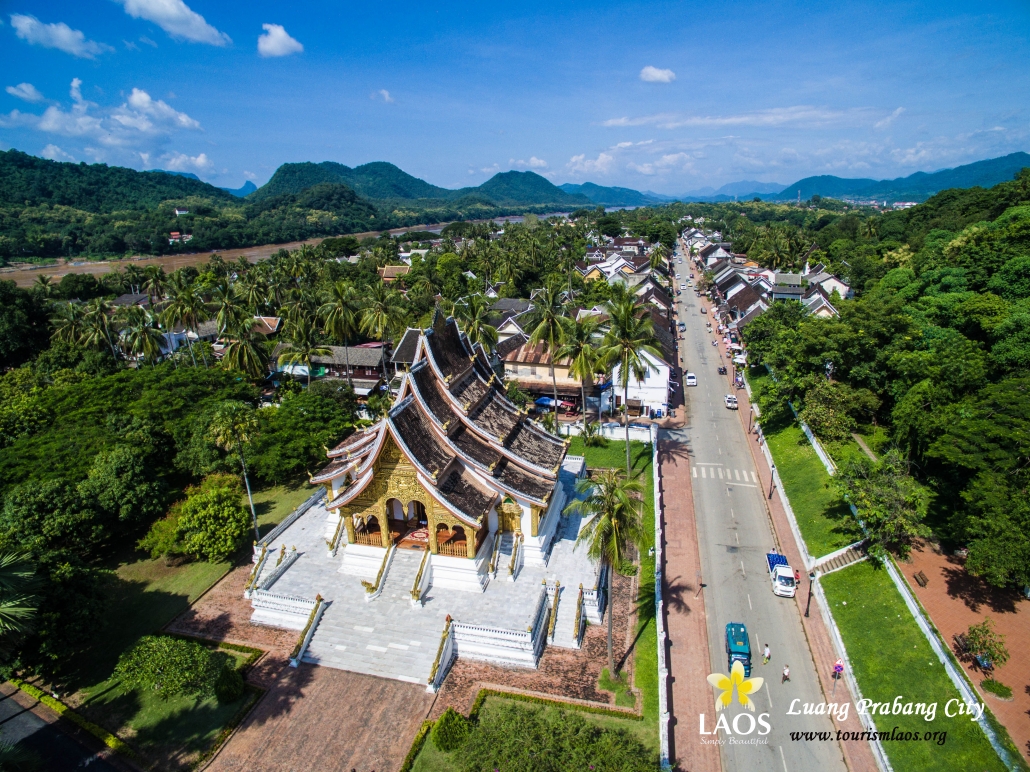
Situated in the centre of northern Laos, Luang Prabang is classified as a UNESCO World Heritage Site for its outstanding cultural, historic and architectural values and its harmonious relationship between the natural and built environment. In the 14th century, the King Fa Ngum founded the first Lao Kingdom, Lane Xang, here in Luang Prabang. Luang Prabang remained the capital of Lane Xang until 1565 when the capital was moved to Vientiane. It remained to serve as the country’s spiritual and religious centre.