In 2024, more than 300,000 people visited Vientiane’s main tourist attractions, contributing more than LAK 9 billion (over USD 400,000) to the local economy.
Khampueang Vongchandy, Deputy Director of Vientiane Museum and Archaeology Department, noted the significant rise in tourism in the capital during the Visit Laos Year 2024 campaign, state media reported. The tourism year resulted in a large number of tourists flocking to visit Vientiane’s primary tourist attractions, including That Luang, Hor Pha Keo and Sisaket temple.
A total 322,760 people visited those three sites, including 289,749 international travelers and 33,014 domestic visitors. South Korea topped the list of countries sending the most tourists, followed by Thailand, China, Europe, and others.
A breakdown of visitors to each site includes 171,245 at That Luang, 81,035 at Hor Pha Keo and 70,245 at Sisaket Temple, building on significant growth compared to 2023.
Also, a total of 106 foreign delegations visited the sites, bringing 4,225 guests alongside 3,068 students.
Vientiane has worked to improve these three tourist sites over the past year to attract more visitors. In 2025, further upgrades are planned, including improvements to ticket booths, flower gardens, offices, and herb gardens. More focus will also be given to advertising through newspapers, TV, radio, online platforms, and the official website to raise global awareness and encourage more visitors.
https://www.tourismlaos.org/wp-content/uploads/2025/01/3-Tourist-sites.jpg6271200Sylivanla Vongphachanhhttps://www.tourismlaos.org/wp-content/uploads/2025/05/Lao-Simply-Beautiful-.webpSylivanla Vongphachanh2025-01-29 09:35:482025-01-10 09:37:17Vientiane’s Top Tourist Sites Attract Over 300,000 Visitors in 2024
Construction of the fifth “Friendship Bridge” across the Mekong River, linking Bolikhamxay Province in Laos and Bueng Kan Province in Thailand, is now 96.64 percent complete.
The project is on track to finish on schedule, with plans to lay the final concrete in March, connecting the two sides of the bridge at the central point. The official opening ceremony is set for May 2025.
The completion and opening of the bridge will coincide with the celebration of the 75th anniversary of Lao-Thai diplomatic relations.
By providing a more direct route along the East-West Economic Corridor, the bridge aims to reduce travel time and logistics costs for businesses operating between these countries.
Bolikhamxay, located near Vietnam’s eastern border, is close to Vinh, a major city in Vietnam and a key point on the East-West Economic Corridor linking Myanmar, Thailand, Laos, and Vietnam.
The first four bridges across the Mekong River between Laos and Thailand have already established direct road links between Vientiane and Nong Khai, Savannakhet and Mukdahan, Khammouan and Nakhon Phanom, and Huayxai and Chiang Khong.
https://www.tourismlaos.org/wp-content/uploads/2025/01/5th-Lao-Thai-Friendship-Bridge.jpg6271200Sylivanla Vongphachanhhttps://www.tourismlaos.org/wp-content/uploads/2025/05/Lao-Simply-Beautiful-.webpSylivanla Vongphachanh2025-01-28 09:33:432025-01-10 09:35:10New Lao-Thai Bridge Close to Completion
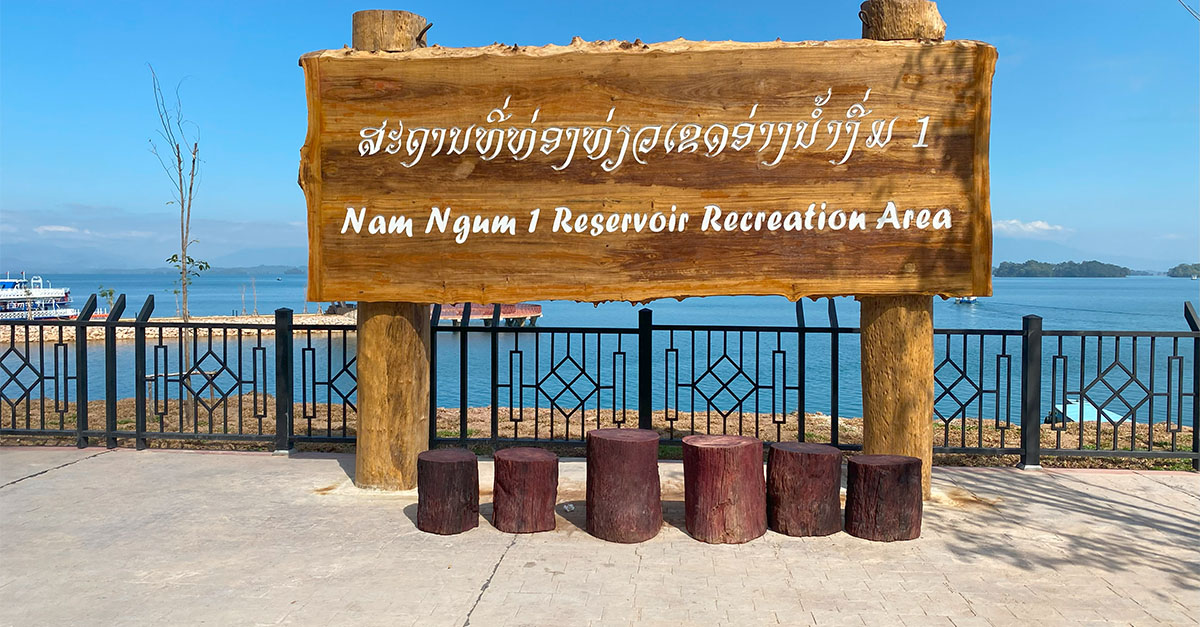
Vientiane Province is once again in the spotlight with a fresh tourism draw—the newly upgraded Nam Ngum 1 Reservoir Recreation Area, also known as “Nam Ngum 1 Reservoir” or “Thalay Lao,” meaning the Lao Sea.
Located in Keooudom District, the reservoir officially reopened on 3 December after a three-year closure for extensive redevelopment.
“We are expecting at least 1-2 million visitors to visit this place in 2025,” said Sisavath Sengphachan, Vientiane Province’s Head of Information, Culture, and Tourism, who oversees the facility. “We have it all here—nature, food, interesting historical background, and, of course, it’s all environmentally friendly.”
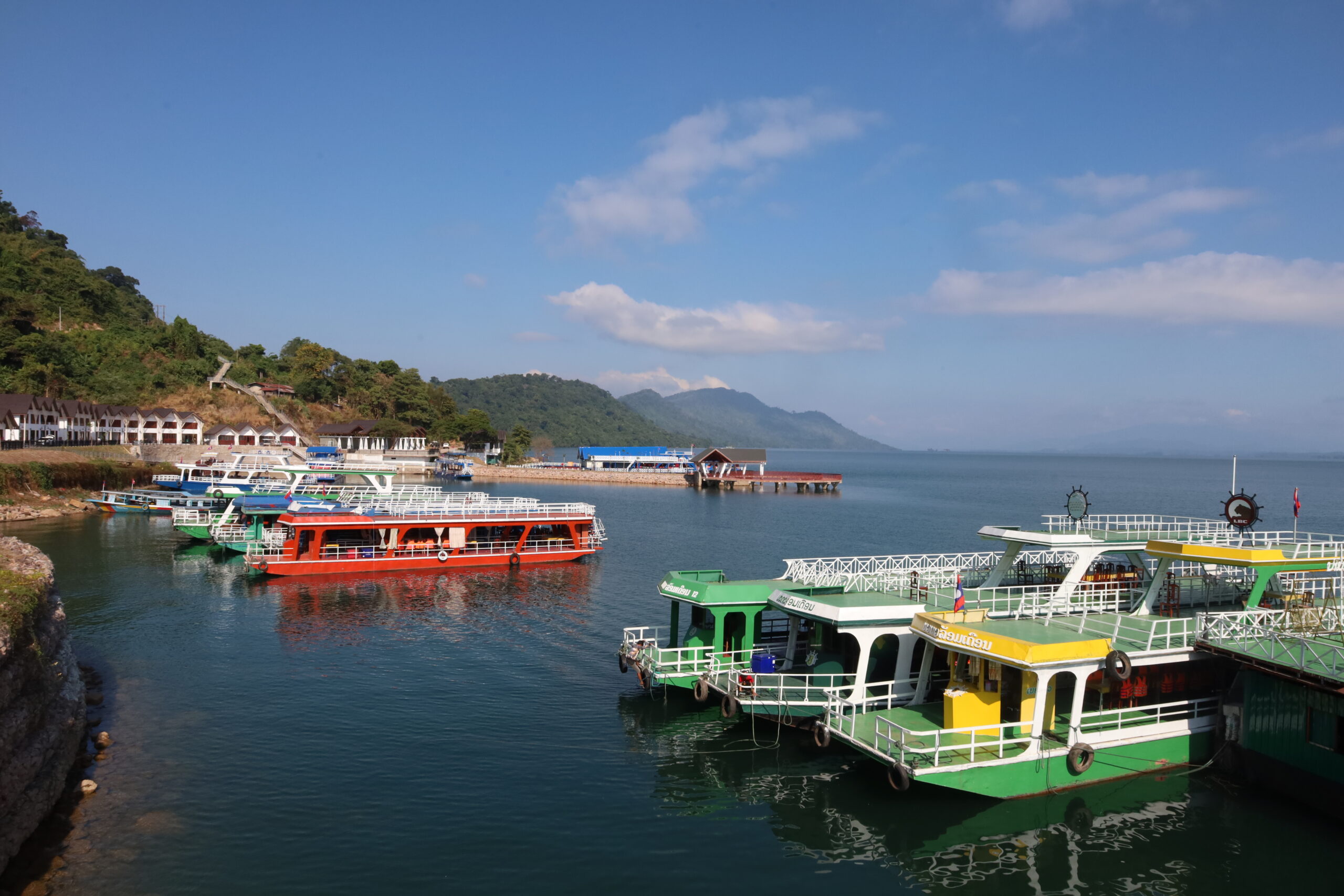
The reservoir’s main area, the marina, now boasts 36 boats connected to on-site restaurants.
Visitors are greeted by an entry gate, parking facilities, and a circular viewing pavilion. For those seeking scenic views, the site offers three viewing points, a stepped viewing platform, and walkways leading to boat restaurants.
Redevelopment, Compensation, and Green Efforts
This redevelopment not only enhances the tourism appeal of Vientiane Province but also brings upgrades to surrounding infrastructure. The 6.3-kilometer access road to the site has been transformed into a concrete pathway, linking the reservoir to Highway No.10. Internal roads and side streets within the port area have also been refurbished, making it easier for visitors to navigate the site.
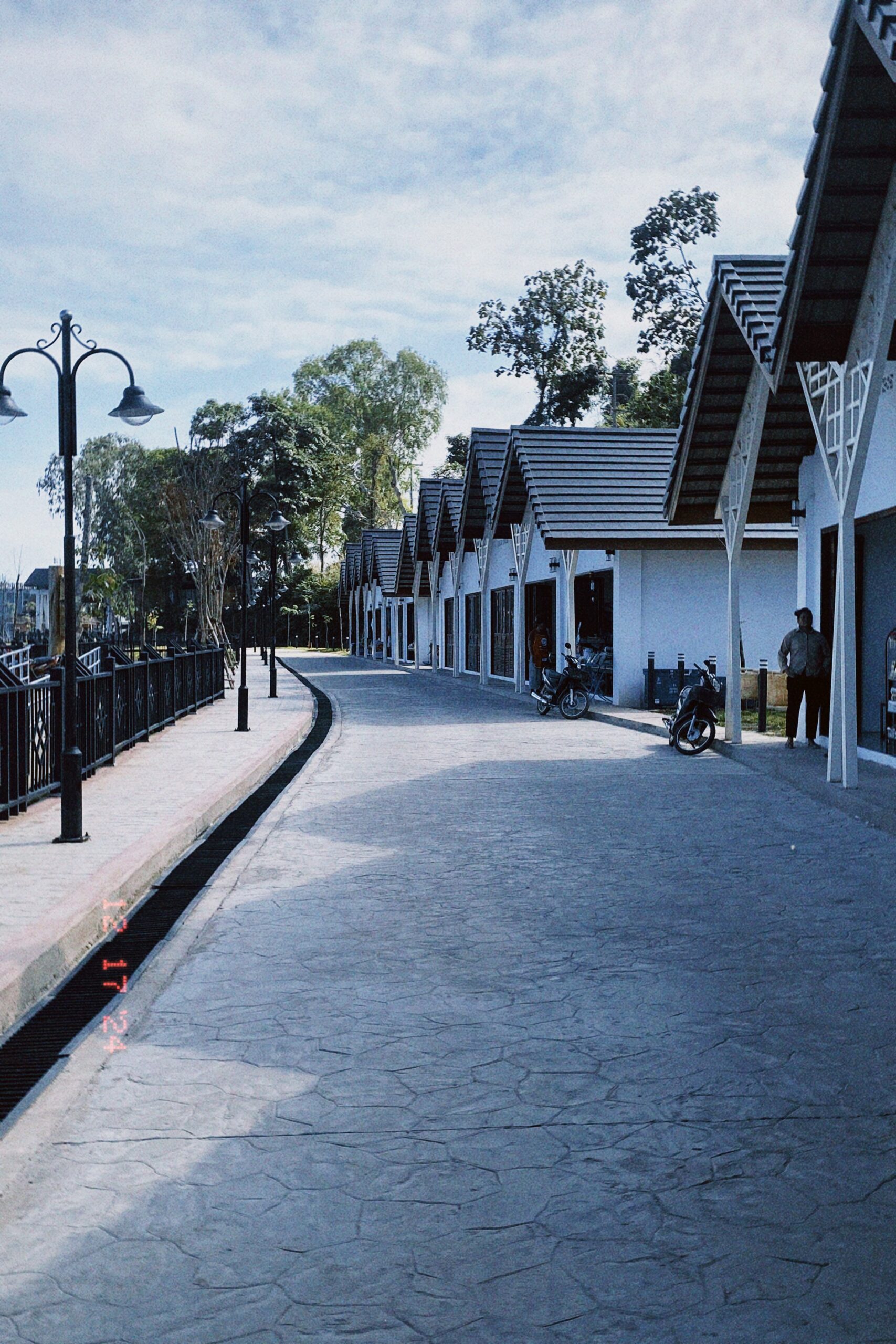
The walkway at the site where shops are located.
However, the redevelopment process was not without its challenges. To facilitate the project, the government relocated residents who had once lived in the area. The head of Vientiane’s tourism department explained that the Nam Ngum 1 Reservoir site was originally a village inhabited by fishing enthusiasts.
Despite the relocation, Sisavath assured that the affected residents were compensated. Nineteen families considered to have “special needs” were selected for full relocation support. “We granted them land about 3 kilometers from here and provided the necessary funds for their move,” he said.
One of the shopkeepers, who was part of the 19 families originally residing at the site, shared her experience of being relocated during the construction period.
“They provided us with money to build a house to stay in for three years during the redevelopment,” said the woman, who had lived in the area for 30 years and now operates a snack shop at the site. She noted that project officials regularly checked how the compensation funds were being used.
“They paid us compensation every six months from the start of construction until it was completed,” she added.
In addition to the financial support, the woman mentioned that the government occasionally treated them to meals as part of their compensation efforts.
After the redevelopment was completed, she said that they were allowed to return to the newly developed site.
“To compensate for the relocation, they let us stay here rent-free for one year,” she said, adding that she would start paying land fees beginning 3 December, 2025.
Sisavath then highlighted the environmentally-friendly initiatives at the Nam Ngum 1 Reservoir, emphasizing efforts to enhance the area’s greenery.
He also noted that the construction team made a conscious effort to preserve the existing vegetation during the development process.
“I know the trees and plants here don’t look very appealing right now,” Sisavath admitted. “But we’re going to plant even more moving forward. I’m confident this place will feel much more natural by next year.”
Challenges, Measures for Sustainability, Waste Management
Maintaining cleanliness is another priority at the facility.
“We have three types of bins,” Sisavath said, emphasizing the importance of maintaining an environmentally friendly space.
“Yellow bins are for recyclable trash, red bins are for hazardous waste, and green bins are for garbage that can be turned into fertilizer.”
Despite these measures, proper waste disposal remains a challenge, according to him.
“Many people do not have it in them to properly dispose of their waste,” he said.
To address this, the Lao government has been conducting training sessions for entrepreneurs and tour guides, who play a crucial role in educating both locals and visitors.
“Many tourists have different backgrounds, which is why we need to ensure guides understand how serious we are about keeping the environment clean so they can pass this information to tourists,” Sisavath emphasized.
However, challenges extend beyond waste management. The marina’s fleet is not fully ready, with only 20 out of 36 boats currently operational, and just five meeting the required standards.
Deputy Head of Information, Culture, and Tourism, Khammy Phoutthavong, outlined plans to address this issue, stating that by 2025, they aim to have at least 25 to 30 boats meet the required standards.
Boats at the Nam Ngum 1 Resevoir’s Marina
Each boat is required to have a waste tank to manage sewage, but Khammy explained that some boats not meeting these standards are still allowed to operate.
“Why do we let the other boats [that don’t meet the standard] operate? It’s because it’s a tradition to allow them, even if they don’t meet the new standards.”
He added that these boats were already in operation before the redevelopment of Nam Ngum 1 Reservoir and before the current standards were introduced.
This leniency, he said, also helps compensate for the long hiatus the boats faced during the facility’s redevelopment into the Nam Ngum 1 Reservoir.
Although the boats are ready to operate, Khammy noted that they currently cannot take visitors to the surrounding islands, as those are still under development. He expects island visits to begin by mid-2025.
Positive Reactions from Locals and Tourists
Despite the lengthy redevelopment, the project has garnered positive feedback from both locals and tourists.
“Since the reopening of the site, I’ve had a lot of tourists hiring me to drive them to the reservoir,” said a local driver.
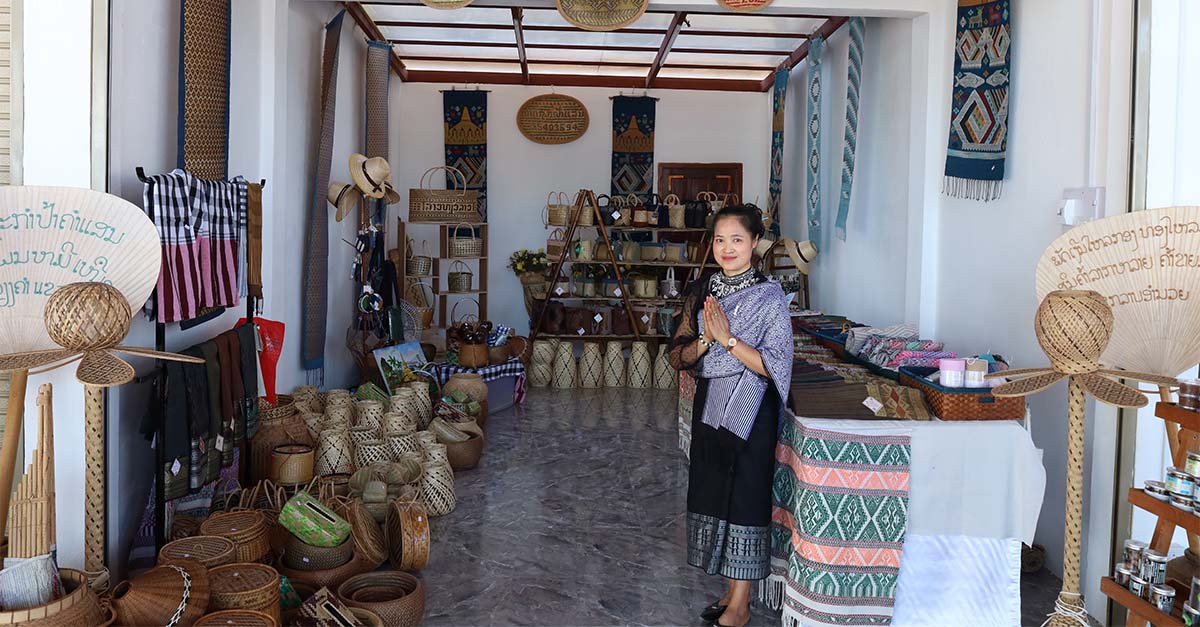
Another resident, Khamvaen, who runs a traditional handicraft souvenir shop at the site, also expressed her happiness with the redevelopment.
“We’ve seen a lot of tourists coming to see us, especially in my shop,” said Khamvaen, who just opened her store after the redevelopment.
Her shop offers a variety of handicrafts, including traditional snacks, scarves, sticky rice baskets, and traditional medicine. “More tourists means more profit for us,” she added. “Every handicraft in my shop is handmade, deliberately crafted by a talented local team, which adds value to them.”
Khamvaen mentioned that most tourists who have visited so far are Chinese, rather than Westerners. However, while the influx of tourists is beneficial, she highlighted a significant challenge: the language barrier.
“I have to use sign language to communicate with the Chinese tourists most of the time,” she said, adding that it would be helpful if the Lao government could offer a basic Chinese language course to assist shopkeepers.
Another resident, Xayadeth, the new owner of the Daolormduean boat restaurant at the site, who took over from the previous owner, also shared his excitement.
“Coming here has been a blessing,” said Xayadeth. “My restaurant is usually packed with visitors in the afternoon and reaches its peak during the weekend when the site sees a large influx of tourists.”
The Nam Ngum Reservoir project was supported by the Asian Development Bank (ADB), with a total investment of USD 5.33 million. Spearheaded by the Ministry of Information, Culture, and Tourism, construction began on 1 July, 2021, and reached completion on 30 October this year. Khamfong Group Sole Co., Ltd., served as the primary construction contractor.
With its focus on sustainability, accessibility, and cultural preservation, the Nam Ngum Reservoir Recreation Area marks a new chapter for Vientiane Province’s tourism sector.
Xayaboury Province is set to host the traditional Phi Ta Khon Festival– or Masked Ghost Festival, from 5 to 12 February at Sibounhueng Temple in Yai Village. This annual event is a highlight of the region, combining the popular Boun Pha Vet Festival–or Prince Vessantara Festival, with the unique tradition of Phi Ta Khon, or “masked ghosts.”
The roots of the Phi Ta Khon Festival trace back to the Buddhist tale of Prince Vessantara, or commonly called Phavet by Lao People. In Buddhist tradition, Prince Vessantara is revered for his boundless generosity.
According to the legend, when the prince returned to the city after years of exile in the forest, he was accompanied by spirits and forest guardians for protection. This procession of “ghosts” symbolized the bond between the spiritual and human worlds.
The Lao saying “Phi tam khon,” meaning “ghosts follow people,” reflects this tale. Over generations, the phrase evolved into “Phi Ta Khon,” and the procession of masked figures became a unique feature of Xayaboury’s Boun Pha Vet celebrations.
The masks used in the festival symbolize the creativity and imagination of Paklai’s ancestors. Made from bamboo, the masks are characterized by their oversized heads, long noses, extended tongues, and exaggerated ears. They are often inscribed with playful or romantic phrases in Lao, representing the joyous and lighthearted spirit of the festival.
These masked figures, dressed in colorful attire, parade through the streets, making unique sounds and bringing life to the festival.
For the people of Xayaboury, the Phi Ta Khon Festival is more than just a celebration; it is a way to preserve and pass down their cultural heritage to future generations.
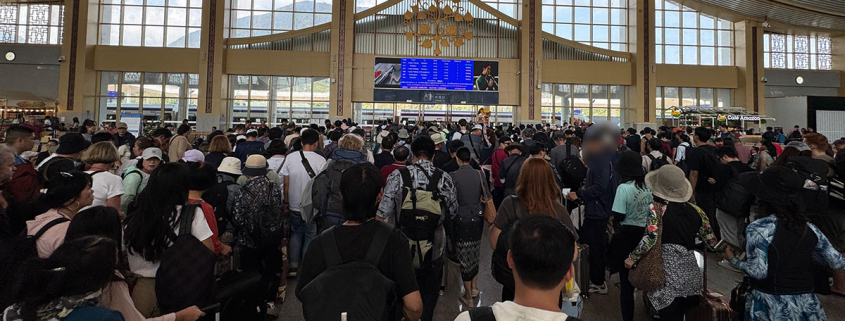
With the Chinese New Year approaching, the Laos-China Railway has rolled out special measures at the Bohan Railway Border, including expanded counter services and a lane for travelers, to manage the surge in passenger flow.
Starting from 13 January, the Bohan Railway Border has expanded its counter services and opened a dedicated lane for “People Returning Home During the Chinese New Year.” This special crossing prioritizes elderly travelers, pregnant women, children, and others needing extra assistance.
The lane was usually reserved for emergencies and now has been opened for the holiday season to help ease congestion. Additional measures, including “classified crossings” and “peak service windows,” have also been implemented to improve efficiency for all passengers.
In Vientiane, the Chinese New Year celebrations officially began on 15 January with an opening ceremony under the theme “Drinking from the Same River, Living in Harmony as One Family.” The event highlighted the cultural bond between Laos and China, with both the Chinese New Year and the Lao Lam Vong Dance recently recognized as UNESCO World Cultural Heritage.
The following day, the arrival of the D87 train from Kunming to Vientiane marked the start of the Spring Festival cultural event along the China-Laos Railway.
Passengers experienced live performances by Chinese and Lao artists, turning the train journey into a lively cultural experience including traditional songs, dances, and festive activities, such as the sampling of Pu’er tea and Yunnan coffee.
https://www.tourismlaos.org/wp-content/uploads/2025/01/CNY1.jpg6271200Sylivanla Vongphachanhhttps://www.tourismlaos.org/wp-content/uploads/2025/05/Lao-Simply-Beautiful-.webpSylivanla Vongphachanh2025-01-25 11:44:332025-01-20 11:46:19Laos-China Railway Expands Services for Chinese New Year Travelers
Houaphanh Province will officially add Pa Bum sauce and Tai Daeng traditional singing as Cultural Heritage on 30 December, said the provincial governor.
Located in the northern part of Laos, Houaphanh Province shares borders with Vietnam, Xiengkhouang Province, and Luang Prabang to the west. The province is home to a wide variety of ethnic groups, including the Khmu, Hmong, Lao Theung, and Tai Daeng.
In Houaphanh, traditions passed down through generations remain deeply valued by the local communities. Residents actively preserve their cultural heritage as a symbol of identity, highlighting the importance of traditions like Tai Daeng singing and Pa Bum sauce, which truly represent Houaphanh to visiting tourists.
Pa Bum sauce
Pa Bum Sauce, also known as “Jeo Pa Bum Sam Neua,” is a traditional dish central to daily life in the region. The recipe, passed down through generations, includes fish, chilies, garlic, Sichuan pepper, and a variety of seasonings, all of which are combined and fermented in a jar or wrapped in a wooden stick.
The sauce is typically enjoyed with sticky rice and boiled vegetables like bamboo shoots, apple gourds, and cabbage, along with other staple Lao dishes.
Tai Daeng singing
Tai Daeng singing is a unique musical tradition of the Tai Daeng ethnic group, characterized by a harmonious blend of traditional Lao instruments such as the Khaen, flute, and pipe, alongside the human voice.
The music consists of four distinct types: Khub Oiy, Khub Aun, Khub Soy Vai, and Khub E Dou Num Nae. Each style has its own unique sound and method of performance, contributing to the region’s diverse musical heritage.
Tai Daeng singing is typically performed during important ceremonies, prayers, and traditional celebrations, such as weddings.
In a similar move to preserve cultural heritage, Houaphanh Province previously recognized the tradition of Khub Sam Neua and the knowledge of silk fabric weaving as local cultural heritage in a ceremony held on 23 November 2022.
https://www.tourismlaos.org/wp-content/uploads/2025/01/IMG_0043.jpg6271200Sylivanla Vongphachanhhttps://www.tourismlaos.org/wp-content/uploads/2025/05/Lao-Simply-Beautiful-.webpSylivanla Vongphachanh2025-01-24 09:27:322025-01-10 09:28:42Houaphanh to Officially Recognize Tai Daeng Singing, Pa Bum Sauce as Cultural Heritage
Starting January 2025, airlines are set to increase flights to Houaphanh province to accommodate the growing number of tourists.
On 26 December, Malaythong Bounyaxay, Head of the Houaphanh Provincial Information, Culture, and Tourism Department reported that the tourism atmosphere in Houaphan Province is “very busy”
“The accommodation facilities in the province are full almost every day,” said Malaythong, adding that the flights from Vientiane to Houaphanh province are currently full.
“Therefore, there will be more flights from to Houaphanh province provided by Lao Airlines, Lao Skyway, and Lanexang Airways to accommodate and satisfy the increasing number of tourists next year.”
Although confirming the increase in flights, the provincial tourism official noted that the exact start date for operations has not yet been finalized.
According to the report provided by Malaythong, the province welcomed a total 53,232 travelers including 16,881 international travelers and 36,351 domestic visitors from January to December, building on significant growth from the previous year over 10 percent, and gained income over LAK 58 billion (USD 2.6 million).
Vietnamese tourists topped the list of visitors, largely due to Vietnam sharing a border with Houaphanh province. China and Japan followed in the rankings. Officials anticipate even greater numbers as the peak tourist season extends into the coming year.
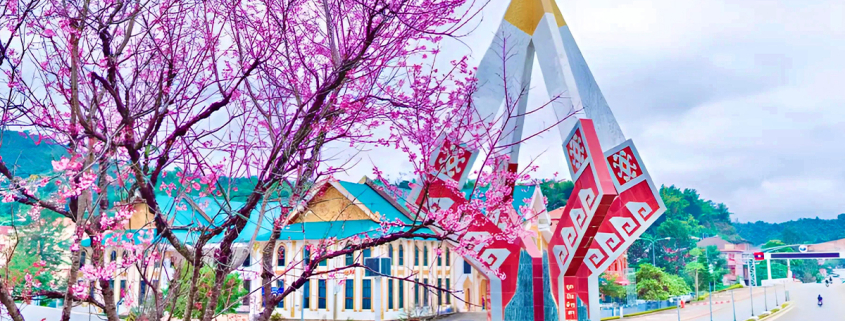
Houaphanh’s top travel destination is nestled in Viengxay district, celebrated for its Cherry Blossoms (Sakura). Designated as Houaphanh’s provincial flower in December 2022. Earlier, the province hosted its annual Sakura Festival between 22 to 24 December.
https://www.tourismlaos.org/wp-content/uploads/2025/01/CHERRY-1.jpg6271200Sylivanla Vongphachanhhttps://www.tourismlaos.org/wp-content/uploads/2025/05/Lao-Simply-Beautiful-.webpSylivanla Vongphachanh2025-01-23 09:25:192025-01-10 09:26:55Houaphanh Province to Expand Flight Services Amid Tourism Boom in 2025
Khammouane Province unveiled its newest eco-tourism destination, Tat Sieng Lue Waterfall, on 20 December, offering visitors a mix of natural beauty and outdoor adventure.
The site, located in Napoung village, about 140 kilometers from the provincial capital, Tat Sieng Lue provides a peaceful retreat for nature enthusiasts and thrill-seekers alike.
The area is being developed by Saiphuluang Group, a local company with a 40-year concession, investing over USD 12 million.
Visitors can already enjoy campsites, ethnic homestays, restaurants, scenic photography spots, trekking bridges, flower gardens, and waterfall views, all supported by modern facilities.
Khammouane Province is home to 199 tourist sites, including 140 nature-based attractions, 30 cultural landmarks, and 29 historical sites.
Among its highlights are the limestone caves such as Tham Nang Aen, Tha Falang, and the famous Konglor Cave.
https://www.tourismlaos.org/wp-content/uploads/2025/01/455264223_1544860266122508_2764243724576108485_n.jpg11522048Sylivanla Vongphachanhhttps://www.tourismlaos.org/wp-content/uploads/2025/05/Lao-Simply-Beautiful-.webpSylivanla Vongphachanh2025-01-22 09:23:492025-01-10 09:25:09Tat Sieng Lue Waterfall Opens as Khammouane’s New Eco-Tourism Site
In response to the rising adoption of EVs, LOCA, an electric vehicle (EV) infrastructure in Laos, has set up 40 fast-charging stations across Laos in 2024, focusing on major cities and key routes to boost EV growth and promote sustainability.
The company’s fast-charging stations deliver power at 120-240 kW, allowing EVs to fully charge in just 20-30 minutes. Through the LOCA EV app, users can locate and navigate to charging stations nationwide, view real-time usage status, and ensure worry-free travel from Laos’ northernmost to southernmost points.
LOCA’s expansion has been bolstered by support from the Asian Development Bank (ADB) Frontier Fund and the United States Agency for International Development (USAID). These collaborations have provided substantial financial and technical assistance to advance clean energy projects in Laos.
The ADB’s investment aims to drive innovation and technological solutions to tackle climate change while encouraging inclusive economic growth. At the same time, USAID’s support has improved clean energy access, cut consumer costs, created jobs, and reduced carbon emissions.
The Growing EV Market in Laos
Demand for EVs in Laos has surged unprecedentedly. 2,101 EVs were imported in 2023, accounting for 25.1 percent of all new vehicle registrations. In the data year to date as of October 2024, the total imported electric cars surged to 4,437, highlighting a consumer shift towards EVs driven by cost efficiency and environmental concerns.
Building on its 2024 success, LOCA aims to expand its fast-charging network to 100 stations by 2026. This growth is designed to accommodate the rapidly increasing number of EV users and promote widespread adoption of electric vehicles across Laos.
https://www.tourismlaos.org/wp-content/uploads/2025/01/LOCA-EV-04-1.webp10041920Sylivanla Vongphachanhhttps://www.tourismlaos.org/wp-content/uploads/2025/05/Lao-Simply-Beautiful-.webpSylivanla Vongphachanh2025-01-21 09:21:592025-03-28 22:39:08LOCA Sparks EV Revolution in Laos with 40 Fast-Charging Stations
On 23 December, the Mekong River Commission (MRC) celebrated the opening of its Education and Visitor Center and the launch of the One Mekong app at its headquarters in Vientiane, Laos. The event also marked the 20th anniversary of Laos hosting the MRC.
The new center showcases interactive exhibits, maps, books, and real-time monitoring tools that highlight the Mekong River’s history and its role in regional cooperation. It will host educational programs, conferences, and learning sessions for researchers, students, and the public, aiming to raise awareness about the river’s importance and the MRC’s work.
A key feature of the center is the Situation Room, which provides real-time river monitoring and forecasting. It connects with the MRC’s Regional Flood and Drought Management Center in Phnom Penh and supports disaster management, climate adaptation, and cross-border collaboration.
The One Mekong app was also launched, giving the public access to real-time data and forecasts about the river.
“Laos is proud to host the MRC Secretariat and this vital hub,” said Prime Minister Sonexay Siphandone. He expressed gratitude to development partners, including Japan, Morocco, and the United States, for supporting the project.
Anoulak Kittikhoun, CEO of the MRC Secretariat, described the center as a bridge between knowledge and action, showcasing the power of science, data, and community engagement. “May this world-class center inspire collective action for the Mekong’s future,” he said.
https://www.tourismlaos.org/wp-content/uploads/2025/01/MRC-1.jpg6271200Sylivanla Vongphachanhhttps://www.tourismlaos.org/wp-content/uploads/2025/05/Lao-Simply-Beautiful-.webpSylivanla Vongphachanh2025-01-20 09:20:332025-01-10 09:21:49Mekong River Commission Launches Education Hub, One Mekong App in Vientiane