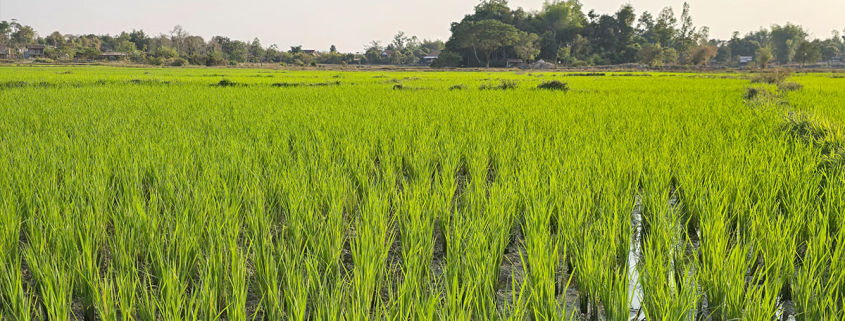
Laos is stepping up efforts to tackle climate-related food insecurity and open new export opportunities, with USD 68.5 million in support from the Asian Development Bank (ADB) and partners to modernize agriculture in six climate-vulnerable provinces.
The new Sustainable Agrifood Systems Sector Project, running from 2025 to 2030, will focus on improving food security, nutrition, and climate resilience in three northern provinces—Xayabouly, Phongsaly, and Houaphanh, and three southern ones, Salavanh, Sekong, and Champasack.
Backed by a mix of loans and grants from the ADB, the EU-ASEAN Catalytic Green Finance Facility, and the ASEAN Infrastructure Fund, the project reflects the growing need to protect food systems from climate shocks while increasing farm productivity and export potential.
At the center of the plan is climate-resilient farming.
Smallholder farmers will receive hands-on training to adapt to changing weather, with a focus on high-value crops like bamboo, coffee, and durian that suit both market demand and local conditions.
The project also offers affordable microfinance options to help farmers and rural businesses stay afloat during extreme weather. Key infrastructure such as irrigation systems and rural roads will be upgraded to allow year-round farming and easier access to markets.
Community involvement and gender inclusion are also major parts of the plan. Both men and women will help lead and maintain local infrastructure projects, ensuring long-term success and shared responsibility.
By tackling climate risks, food shortages, and trade barriers all at once, the project marks a big step in preparing Laos’s rural economy for a more unpredictable future.
https://www.tourismlaos.org/wp-content/uploads/2025/07/LT-FB-Square-Template-1.jpg6271200Sylivanla Vongphachanhhttps://www.tourismlaos.org/wp-content/uploads/2025/05/Lao-Simply-Beautiful-.webpSylivanla Vongphachanh2025-07-21 11:15:352025-07-15 11:16:56Laos Launches Climate-Smart Farming Project in Six Provinces
Crowne Plaza and Holiday Inn & Suites Vientiane have announced the launch of CTC Laos Marketing 2025, a two-day seminar and workshop aimed at helping marketers, online sellers, and content creators in Laos keep pace with the fast-changing marketing landscape.
The event will take place on 26 and 27 July at Holiday Inn & Suites Vientiane, bringing together industry leaders and creative minds from Laos and Thailand to share insights and practical tools.
Organisers say marketing trends are shifting faster than ever, making it crucial for businesses to stay updated. They caution that those who fail to adapt risk falling behind, as traditional strategies focused solely on reach are no longer enough to drive real results. Instead, the focus must now be on content that converts, engages meaningfully, and builds long-term value.
AI, Consumer Behavior, Sales-Driven Strategies in Focus
The seminar will feature keynote talks and hands-on workshops, with a strong emphasis on using artificial intelligence to enhance marketing effectiveness. Participants will also explore how changing consumer behavior affects decision-making and why sustainable engagement is now more important than ever.
More than eight speakers will take the stage, including business owners, agency founders, marketing strategists, and content experts from both Laos and Thailand.
Among them are Sittipong Sirimaskasem, CEO and Founder of RGB72 and CREATIVE TALK; Narongyot Mahithivanitcha, Co-founder and Head of Growth at TWF Agency; and Sittinun Polvisutsak, Owner and CEO of Content Shifu.
Other speakers include Chaweewan Kongchoksamai, Chayanis Jumpeerat, and Lao experts such as Souphanith Vongsengthong, Bounhou Alounvong, Patxalin Phanouvong, and Mangkonephet Xayasane.
The sessions will cover a range of timely topics such as customer behavior, storytelling for monetisation, the Business Model Canvas, and how to apply generative AI in marketing. Attendees will also have opportunities to ask questions, network with peers, and exchange ideas with the speakers.
Early Bird tickets are priced at LAK 1,350,000 (USD 62.74), available for a limited time before increasing to the regular price of LAK 1,690,000 (USD 78.55). Groups purchasing five or more tickets will receive a 15 percent discount. To reserve tickets, contact Chanthasone at 020-59992439. For sponsorship inquiries, reach out to Mangkonephet at 020-77617518.
https://www.tourismlaos.org/wp-content/uploads/2025/07/Lao-Marketing-Seminar-to-Take-Place-in-Vientiane-This-July-1.jpg6271200Sylivanla Vongphachanhhttps://www.tourismlaos.org/wp-content/uploads/2025/05/Lao-Simply-Beautiful-.webpSylivanla Vongphachanh2025-07-18 11:10:092025-07-15 11:13:46CTC Laos Marketing 2025 to Take Place in Vientiane This July
Vientiane’s BRT service is scheduled to begin trial operations free of charge for three months by the end of August, Mayor of Vientiane Capital Athsphangthong Siphandone announced during the 9th Ordinary Session of the Vientiane People’s Council’s second legislature on 7 July.
The BRT project has made substantial progress, with construction of lanes and stations currently at 71.64 percent completion, according to Athsphangthong. Officials expect construction to reach 90 percent completion by the end of July, positioning the system to become fully operational by the end of 2025.
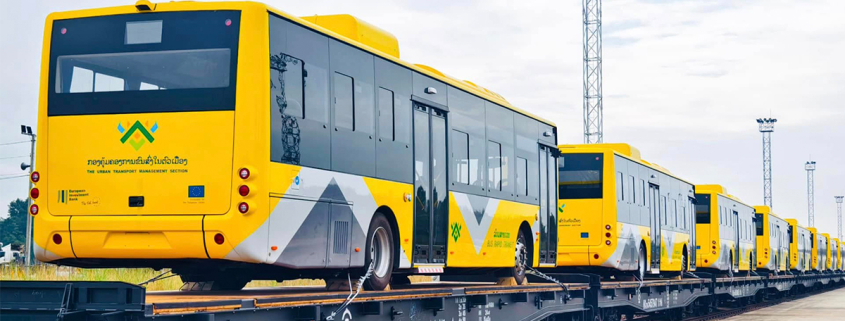
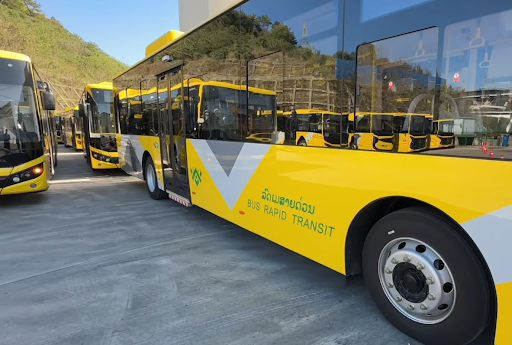
The BRT system will feature 12-meter electric air-conditioned express buses with 40 seats each, operating on dedicated routes for faster and safer service. Twenty-eight of the total 55 electric BRT buses arrived in Laos on 5 November 2024, with the remaining 27 buses expected to arrive in the future.
Bus Rapid Transit (BRT) buses during the way travelling from China by Chinese manufacturer Chery Wanda to Vientiane Capital, Laos. 5 November 2024. (Photo credit: Laos – China Railway Company Limited)
The system will operate daily from 6 am to 10 pm and will integrate seamlessly with the city’s existing bus network.
The BRT route includes six main stations located throughout the capital: Chao Fa Ngum Park, Inpeng Temple, Morning Market (Vientiane Bus Station), Patuxay, Phonekheng, and National University of Laos. These buses will run on exclusive BRT lanes, providing faster and safer service for commuters while reducing traffic congestion in the city center.
The project extends beyond the initial phase, with construction plans including expanding the BRT route to connect Wattay International Airport and the Laos-China Railway Station. This expansion is targeted for completion by the end of 2026, creating crucial transportation links between the capital’s key transit hubs and establishing seamless connectivity for both domestic and international travelers.
Since its mid-2024 launch, the project has made strong progress, aiming to improve public transport with efficient, eco-friendly service for Vientiane’s residents and visitors.
https://www.tourismlaos.org/wp-content/uploads/2025/07/Laoss-Bus-Rapid-Transit-in-Vientiane-Capital.jpg6271200Sylivanla Vongphachanhhttps://www.tourismlaos.org/wp-content/uploads/2025/05/Lao-Simply-Beautiful-.webpSylivanla Vongphachanh2025-07-17 11:06:172025-07-15 11:09:13Vientiane’s Bus Rapid Transit Service Set to Begin Trial Operations by End of August
Vat Phou, an ancient temple in Laos’ Champasack Province, has been featured in a National Geographic Travel article as a hidden gem for travelers seeking serenity, history, and beauty without the crowds.
In the article, the National Geographic draws attention to Vat Phou’s unique architectural and spiritual qualities, describing it as a “travel dupe” for Angkor Wat. While Cambodia’s iconic temple attracts some six million tourists a year, Vat Phou remains a relatively untouched site.
Background Similarities
Both temples were constructed during the Khmer Empire, which spanned from the 9th to 15th centuries, and share distinctive elements such as carved stone pillars and religious symbolism rooted in Hindu cosmology.
However, the National Geographic article points out that their layout sets them apart.
Angkor Wat features concentric enclosures symbolizing Mount Meru, the mythical center of the universe, while Vat Phou is laid out in a linear design along a one-mile raised causeway, leading visitors up a hillside to a sanctuary fed by a natural spring.
This ascending pathway, broken into seven stone terraces, was highlighted as a key reason for Vat Phou’s spiritual impact.
The design allows travelers to experience a slow climb through sacred structures, culminating in a moss-covered shrine adorned with carvings of apsaras and Hindu deities.
Originally housing a linga symbolizing the god Shiva, the shrine later came to feature a Buddha statue after the decline of the Khmer Empire in the 13th century.
History, Myth, Solitude Intertwined
National Geographic also pointed to Vat Phou’s setting as a distinguishing feature.
The temple complex sits at the base of Lingaparvata, or Linga Mountain, named for its phallus-shaped peak associated with Shiva.
Just four miles from the town of Champasak, with its architecture and riverside, Vat Phou is seen as easily accessible, providing a rare laid-back feeling.
The article also touched on the site’s mysterious origins.
While its full history is still unclear, local legend says King Kammatha built the first sanctuary after mythical ogres demanded his daughter, Nong Sida. A small pavilion and hidden library named after the princess still stand nearby.
Annual Celebration Embracing the Tradition of Vat Phou Festival
Beyond its archaeological significance, the temple continues to serve as a spiritual center and a gathering place for celebration.
Vat Phou is revered by many Lao people as a sacred site believed to possess protective powers. It continues to serve as a destination for worship and cultural tourism.
Each year, Champasack Province hosts the Vat Phou Festival to celebrate the temple’s legacy. The festival featured a wide variety of traditional and casual activities, catering to both local and international visitors.
According to the National Geographic, it’s the combination of history, mythology, and near-complete solitude that makes Vat Phou one of the region’s most underrated sacred sites.
https://www.tourismlaos.org/wp-content/uploads/2025/07/wat-phou-3.jpg6271200Sylivanla Vongphachanhhttps://www.tourismlaos.org/wp-content/uploads/2025/05/Lao-Simply-Beautiful-.webpSylivanla Vongphachanh2025-07-16 10:35:002025-07-08 10:36:57Vat Phou Featured on National Geographic as Hidden Gem in Southeast Asia
Xayabouly Province is currently home to 220 registered domestic elephants. Of these, 143 are actively working within the province, while the others are active in different areas outside the province, Kenthao district deputy governor Somsy Saophila noted during a meeting on 3 July.
Domestic elephants are elephants raised by humans for various purposes, such as transportation, farming, or performances. They are considered the direct property of their owners and must be legally registered, which includes creating a ‘photo ticket’ that records the elephant’s details.
In addition to the domestic elephants, approximately 80 to 100 wild elephants live in Nam Pui National Park, which spans three districts in the province: Phieng, Pak Lai, and Thongmixay, Somsy added.
Registered elephants are officially counted and monitored by authorities and benefit from government and conservation programs, such as those led by the Elephant Conservation Center (ECC) in Xayabouly.
The ECC provides welfare, breeding, and veterinary care, particularly for elephants handed over by government order or rescued from illegal trade.
These registered elephants also play a central role in the province’s annual elephant festival, which promotes both conservation and cultural heritage.
During the meeting, authorities evaluated the implementation of an elephant management and conservation agreement, emphasizing the important role elephants have in local communities and the need for their ongoing protection.
The Thursday gathering aimed to encourage collaboration and gather insights to ensure the agreement’s effective enforcement.
According to the World Wildlife Fund (WWF) Laos, the country, once known as “Lane Xang” or “Land of a Million Elephants”, now has only between 500 and 1,000 elephants left, about one-third of the population recorded two decades ago.
WWF also warned that around 10 elephants die each year for every one to two born, placing the species at risk of disappearing entirely from Laos.
https://www.tourismlaos.org/wp-content/uploads/2025/07/Xayabouly-Province-Home-for-220-Registered-Domestic-Elephants.jpg6271200Sylivanla Vongphachanhhttps://www.tourismlaos.org/wp-content/uploads/2025/05/Lao-Simply-Beautiful-.webpSylivanla Vongphachanh2025-07-15 10:32:382025-07-08 10:34:22Xayabouly Province Home for 220 Registered Domestic Elephants
Doi Ka Noi, a renowned Lao restaurant in Vientiane Capital known for its ever-changing seasonal menu and commitment to authentic Lao recipes, closed permanently on 13 May.
The decision followed the unexpected passing of its chef and owner, Ponpailin ‘Noi’ Kaewduangdee, aged 45.
The closure came just months after Asia’s 50 Best named Doi Ka Noi, the 86th best restaurant on the continent – the first Lao restaurant ever to be featured. Noi had recently attended the glittering awards ceremony in Seoul, Korea.
A Lasting Legacy in Print
photo credit: Mick Shippen
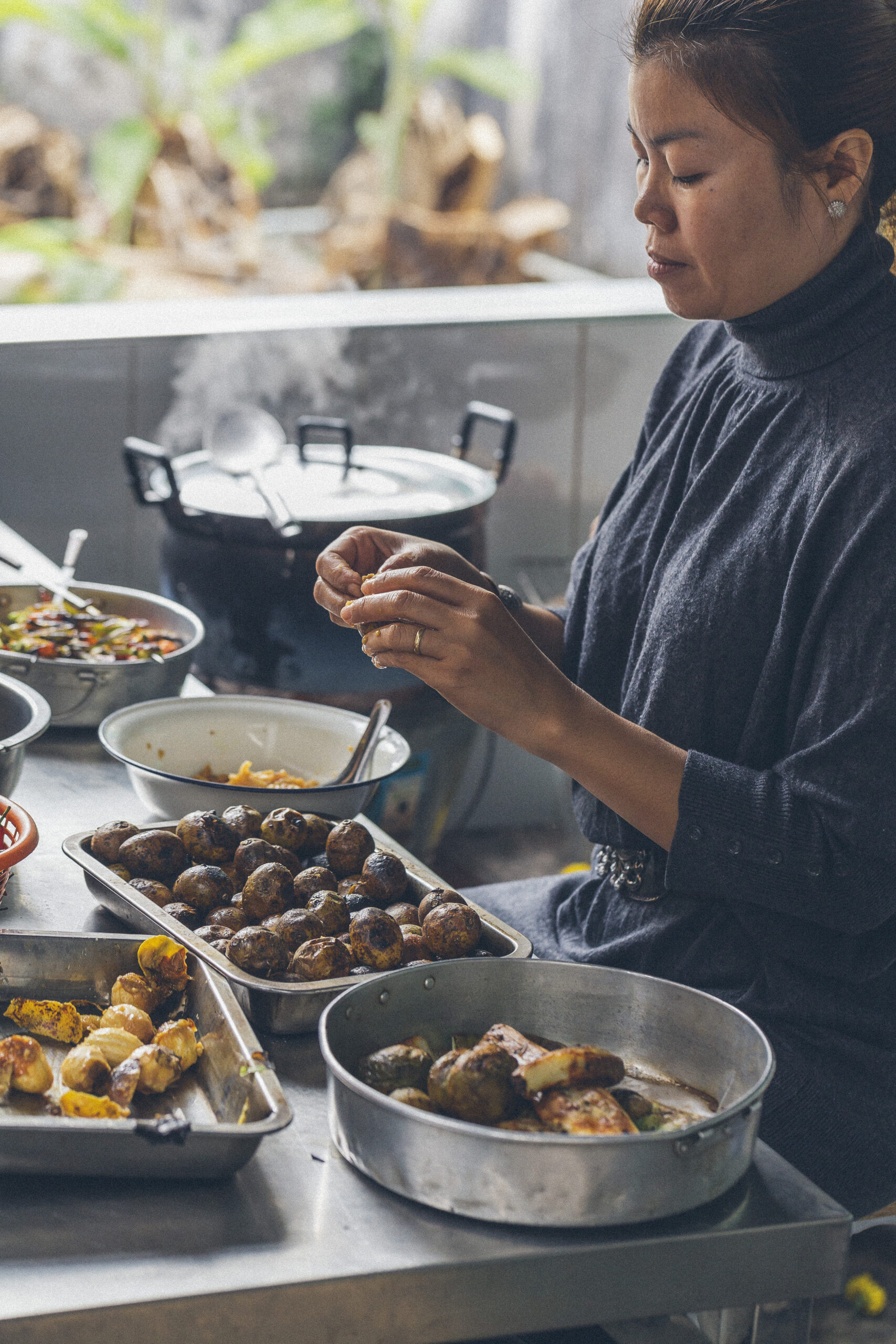
Before her passing, Chef Noi collaborated with her husband, British writer and photographer Mick Shippen, to publish a deeply personal cookbook, A Child of the Rice Fields: Recipes from Noi’s Lao Kitchen, in late 2024. The 500-page volume not only showcases traditional Lao recipes but also tells the story of a chef devoted to preserving her culinary heritage.
In June, the cookbook was honored at the Gourmand World Cookbook Awards in Lisbon, Portugal, an event often described as the Olympics of food publishing.
Every year, the awards honor the best food and wine culture books, printed or digital, as well as food television. A Child of the Rice Fields: Recipes from Noi’s Lao Kitchen took first place for “Best Asian Cookbook”, competing against hundreds of entries from around the globe.
The book was also named runner-up in the “Best Cookbook in the World” category and fourth in the “Food Heroes” category, which celebrates individuals who safeguard culinary traditions.
“Thank you, Noi and Mick, for this 500-page tribute to the heart and soul of Lao cuisine,” said Edouard Cointreau, President and Founder of the Gourmand Awards.
“The world truly needed this passionate, generous, and beautifully illustrated guide that welcomes readers into Lao food with authenticity and elegance. From beloved everyday dishes to bold and adventurous recipes, your book shares Noi’s exceptional knowledge with clarity, depth, and heartfelt care. The fact that such an impressive work is self-published makes this achievement all the more extraordinary in the world of cookbooks.”
Food as Cultural Memory
Noi’s culinary philosophy was rooted in family, seasonality, and discovery.
Many of her dishes were inspired by authentic Lao recipes passed down from her grandmother or gathered during her travels to remote Lao villages. At Doi Ka Noi, her constantly evolving menus reflected this philosophy, celebrating whatever seasonal ingredients were freshest at local markets.
photo credit: Mick Shippen
She was also the first and only Lao member of the Slow Food movement, which is dedicated to preventing the disappearance of local food cultures and traditions. Noi had also been involved in projects creating nutritious recipes to help improve the health of children in Laos.
Mick told the Gourmand Awards audience in Lisbon, “I am so proud, but heartbroken she was not with me to hear the praise and adoration for our work.”
He also vowed to continue her legacy and complete two other books they had begun together, one on the ethnic foods of Northern Laos and another on the fruits, vegetables, and foraged foods found in markets in Laos.
“We have completed more than half of the recipes for the Northern Laos book, and although finishing it without Noi will be a difficult and emotional task, I need to do it for her. Noi’s unexpected death at such an early age is a tragedy. When she passed away, a huge amount of knowledge was lost. We had so much more planned over the coming years to ensure Lao culinary culture was preserved and promoted.”
Global Recognition for Lao Cuisine
The impact of A Child of the Rice Fields continues to grow. British celebrity chef Nigella Lawson said, “It’s a big, beautiful, lovingly created book: a feast for the curious cook and a comprehensive and intimately authoritative primer on a fascinating culinary culture.”
A Child of the Rice Fields is the most comprehensive cookery book that captures the depth and diversity of Lao flavors, significantly contributing to the safeguarding of the nation’s culinary heritage.
“Noi, through her restaurant and book, did more than anyone to promote Lao food internationally. Over the last few weeks, I have received hundreds of messages from people around the world expressing their sadness and recalling fond memories of her and dining at Doi Ka Noi. The book has been sent to countries as diverse as Australia, Poland, Switzerland, Mexico, Taiwan, Japan, and Belgium. The recognition and accolades at the Gourmand World Cookbook Awards are also a huge validation of her impact. If interest in Lao food continues to grow around the world, it will be largely due to Noi. That fills me with pride, but also breaks my heart that she is not here to see how important she was,” Mick said.
Her work continues to reach new audiences worldwide. The cookbook is available for purchase in Laos through Doi Ka Noi’s Facebook page and in the US through the specialist bookshop Kitchen Arts & Letters, ensuring that Noi’s life’s work, sharing the stories and spirit of Lao cuisine, continues to reach kitchens and hearts around the world, one dish, one story, and one reader at a time.
https://www.tourismlaos.org/wp-content/uploads/2025/07/Doi-Ka-Nois-Final-Dish.jpg6271200Sylivanla Vongphachanhhttps://www.tourismlaos.org/wp-content/uploads/2025/05/Lao-Simply-Beautiful-.webpSylivanla Vongphachanh2025-07-14 10:29:342025-07-08 10:31:37Doi Ka Noi’s Final Dish: How a Lao Chef’s Cookbook Became Her Greatest Legacy
Luang Prabang earned nearly LAK 700 billion (USD 32 million) in the first five months of 2025, with tourism playing a significant role, said Khammouane Khambounme, Head of the Provincial Tax Department.
The province now aims to attract more visitors throughout the remainder of the year through improved tax management strategies.
According to Khammouane, most of the revenue came from the tourism sector, including attractions, hotels, guesthouses, and restaurants.
Due to these factors, the province exceeded its revenue target by reaching 60.2 percent of the annual goal, equivalent to LAK 691 billion. This amount includes both tax and asset-related income, which will be reinvested into further developing the tourism sector.
Authorities are now promoting digital tax systems such as TaxRis, an online tax administration platform, by encouraging businesses to register, submit reports online, and adopt the value-added tax (VAT) system. Legal awareness and tax regulations are being actively shared with both public and private sectors to ensure compliance.
To reach the goal of collecting an additional LAK 466 billion (USD 21,49 million) in the remaining months of the year, the province has developed new measures and strategies to expand tax and asset revenue. The focus will be on increasing transparency and accountability.
In 2024, Luang Prabang welcomed over 2,3 million tourists more than double its original target, boosting GDP to LAK 3,989 billion (approximately USD 183 million).
https://www.tourismlaos.org/wp-content/uploads/2025/07/DSC_7690-1024x684-1.jpg6271200Sylivanla Vongphachanhhttps://www.tourismlaos.org/wp-content/uploads/2025/05/Lao-Simply-Beautiful-.webpSylivanla Vongphachanh2025-07-11 10:27:202025-07-08 10:29:02Tourism Fuels Revenue Surge in Luang Prabang in Five Months of 2025
Laos hosted the Mekong Tourism Forum 2025 in Luang Prabang from 24 to 27 June, spotlighting the proposed ASEAN Rail Tourism Corridor (ARTC) as a key initiative to boost regional travel and connectivity.
Held under the theme “United Journey – Stronger Together,” the forum brought together tourism officials and business leaders from Laos, Cambodia, China, Myanmar, Thailand, and Vietnam to discuss ways to improve cross-border travel.
A key session was the first Greater Mekong Subregion (GMS) Tourism Private Sector Workshop on 25 June, which focused on strengthening regional connectivity through initiatives such as the ARTC.
The ARTC aims to link major cities, including Singapore, Kuala Lumpur, Bangkok, Nong Khai, Vientiane, and Boten, through upgraded rail systems and streamlined immigration processes to make travel across Southeast Asia more efficient.
Phase 1 of the project (2024–2029) will focus on infrastructure readiness, border coordination, and intergovernmental collaboration. It builds on existing networks like the Laos–China Railway and the Laos–Thailand rail link, which have already enhanced mobility in the region.
By expanding these connections, the ARTC is expected to drive tourism growth and support more sustainable, inclusive development across the Greater Mekong Subregion.
The forum also introduced the GMS Tourism Strategy 2030, a regional framework designed to encourage high-quality, sustainable tourism and help the region recover from the impacts of the COVID-19 pandemic.
The strategy prioritizes development in lesser-known destinations and aims to distribute tourism benefits more evenly.
MTF 2025 concluded with the announcement that Myanmar as the next host of the forum in 2026.
Local Experiences and Regional Recovery in Focus
Alongside the main sessions, a tourism exhibition showcased cultural products, local food, and community-based travel experiences, highlighting the region’s commitment to sustainable tourism.
Phouthone Dalalom, Deputy Director General of the Tourism Marketing Department at Laos’s Ministry of Information, Culture and Tourism, emphasized the importance of visitors from neighboring countries and said he hopes the forum will help increase tourist arrivals and strengthen regional ties.
Ing Hang Stupa, a religious monument and national heritage site in Savannakhet Province, is undergoing restoration, with the first phase already completed and the second phase about to begin.
The Department of Information, Culture and Tourism of Savannakhet Province is leading the restoration. The team completed the first phase on 16 June, having started on 11. Their survey revealed several cracks and holes in the stupa’s structure.
During this period, repair crews sealed the damaged areas and cleaned off long-accumulated dirt to prevent water seepage during the rainy season.
The second phase will focus on fixing larger cracks.
Restoration teams plan to follow conservation standards by preserving the stupa’s original materials and design. Before moving forward, experts will collect and analyze material samples to guide the next stage of repairs.
Funding for the project comes from the temple’s own budget, public donations, and contributions from the community. The team also plans to add decorative lighting around the temple grounds to enhance its appearance.
To improve the visitor experience, the Provincial Tourism Department has organized dedicated shop spaces and parking areas.
Although a plan for the second phase is already in place, the start and end dates remain uncertain.
The project, which aims to preserve the site’s cultural value and improve tourism infrastructure, will continue in multiple stages.
Dating back to the 16th century and standing about nine meters tall, Ing Hang Stupa remains one of Savannakhet’s most important cultural and spiritual landmarks.
LOCA, the Lao-grown ride-hailing and electric mobility startup, has announced the extension of its current fundraising round through the issuance of a USD 2.5 million Green Bond.
This new funding is expected to accelerate LOCA’s vision to transform urban transportation in Laos through the adoption of electric mobility and sustainable infrastructure.
The Green Bond issuance and sale will be facilitated by the three securities companies including BCEL-KT Securities Company Limited, LDB Securities Sole Company Limited and Lao-China Securities Public Company.
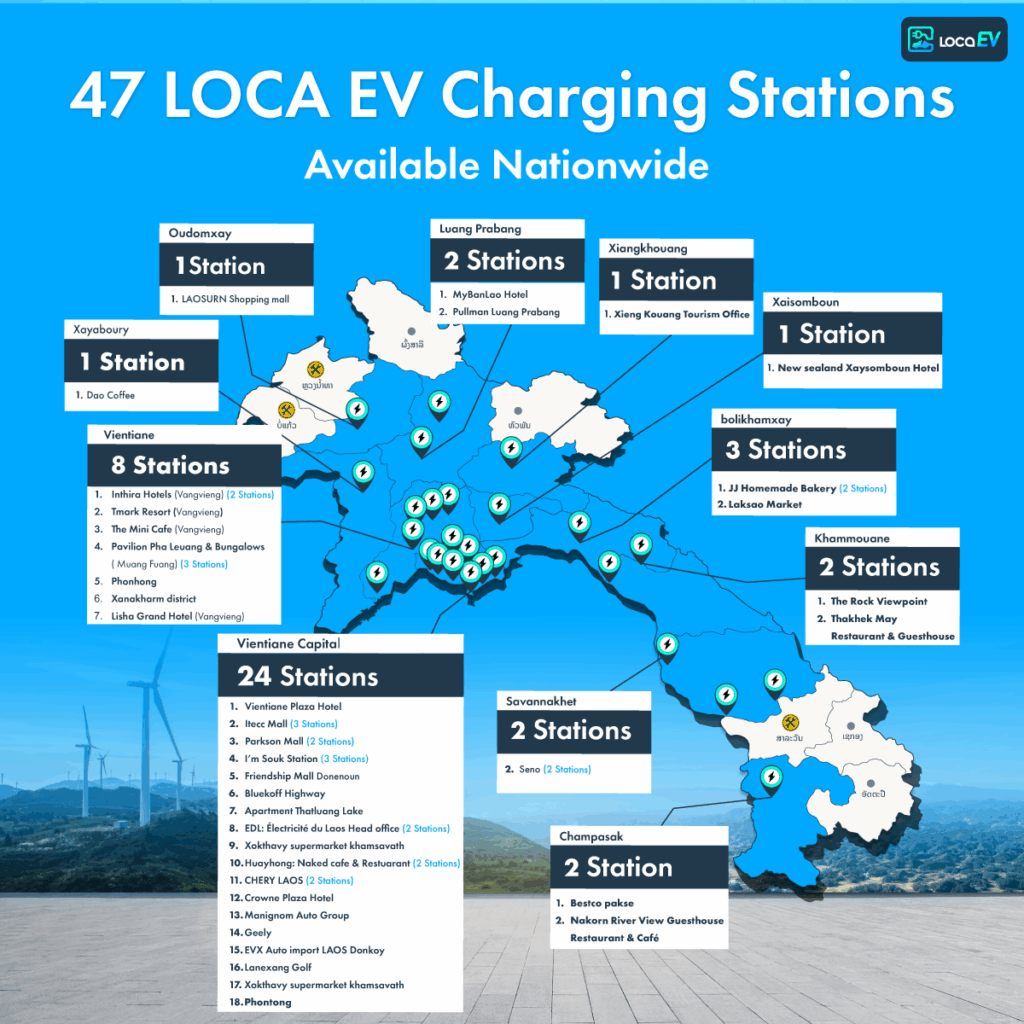
Proceeds from the Green Bond will be used to expand LOCA’s nationwide EV charging infrastructure, including an innovative program to revive defunct gas stations into EV-friendly charging and community hubs
In addition, part of the funding will go toward the rapid expansion of LOCA MINI, an affordable, 100 percent electric taxi fleet aimed at delivering safe, low-cost, and efficient on-demand transportation for city dwellers.
Soulisak Thamnuvong, Deputy Governor of the Bank of Laos said that this represents a significant milestone for the Lao capital market, particularly the issuance of green bonds.
He emphasized that it plays a vital role in fundraising for various entities and provides diverse investment opportunities linked to environmental business practices. This development is important for the country’s economic growth and for reducing emissions.
“We’ve already secured a committed investment in our earlier round, but we’re extending this round to push our 2035 vision forward—now targeting success by 2030,” said Souliyo Vongdala, Co-Founder and CEO of LOCA.
“There isn’t yet a serious player who truly believes EV vision for Laos, so we have no choice but to move forward and commit ourselves to pioneering this transition. We’ve done it before with ride-hailing—helping grow an entire market—and we’re ready to do it again for electric mobility. Our hope is that by leading the way, others will follow, creating a thriving industry and more opportunities for the people of Laos”
Since its inception in 2018, LOCA has grown into the first and largest ride-hailing platform in Laos, with over 1,000 active drivers, 90 percent of whom now operate EVs. Originally aiming to become a 100 percent EV fleet by 2030, LOCA is now on track to reach that goal five years early.
“LOCA is not only growing rapidly but doing so profitably and responsibly,” said Phonepasong Mixab, Co-Founder and Co-CEO of LOCA.
“With a strong team, innovative technology, and a proven business model, we’re confident that this round will bring excellent returns to investors—while also creating real, lasting impact for the Lao people.”
The Lao EV market has seen exponential growth, with four-wheel BEV registrations rising from 1,414 in 2022 to over 5,100 in 2024, and projections showing 8,000+ by 2025 and 15,000 per year by 2030. LOCA’s EV charging infrastructure has already served more than 8,000 unique vehicles, effectively supporting nearly 100 percent of Laos’ BEV drivers, both taxi operators and private owners.
EV drivers in Laos are now saving over 70 percent in fuel costs compared to gasoline, making the switch not only environmentally responsible but also economically smart. Combined with falling EV prices, the adoption rate is only expected to accelerate.
https://www.tourismlaos.org/wp-content/uploads/2025/06/LOCA-Launches-Green-Bond-to-Boost-EV-Use-in-Laos.jpg6271200Sylivanla Vongphachanhhttps://www.tourismlaos.org/wp-content/uploads/2025/05/Lao-Simply-Beautiful-.webpSylivanla Vongphachanh2025-06-24 00:48:002025-06-13 12:50:17LOCA Launches Green Bond to Boost EV Use in Laos